

Depression is a profound mental health condition that negatively affects an individual’s mental health and has a heavy impact on their physical health. Studies show that 280 million people in the world have depression. One of the most common symptoms of depression is thought distortion. Thought distortions disrupt an individual’s cognitive abilities and contribute to other problems like anxiety, panic attacks, and intense stress.
What are Thought Distortions in Depression?
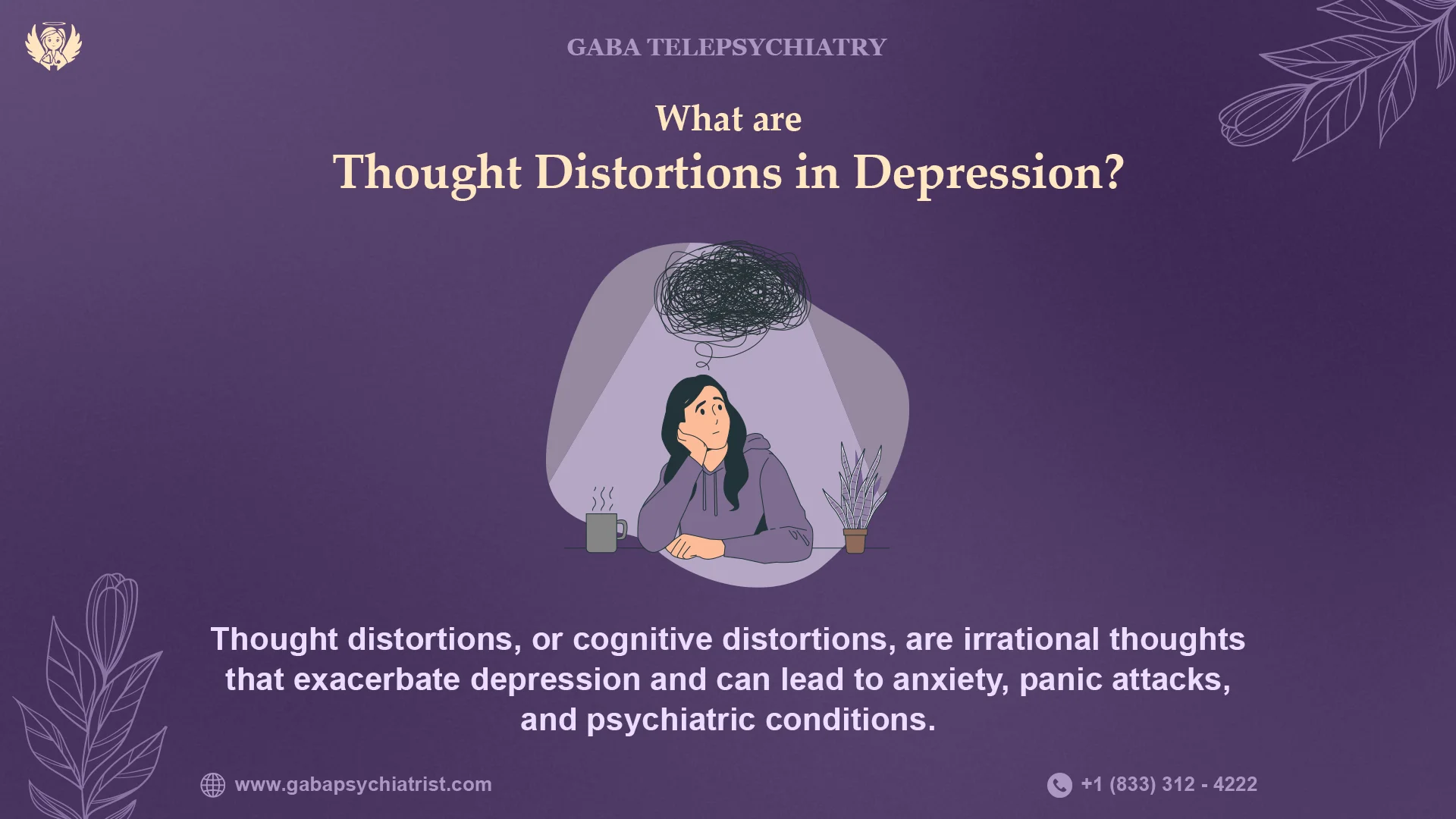
Thought distortions, also commonly called cognitive distortions, are irrational or biased thoughts that could exacerbate depression. These distortions could lead individuals to perceive reality inaccurately, more often than not, in a negative light. These reinforce negative ideas that often result in anxiety, panic attacks, and may also develop into psychiatric conditions.
Thought distortions may lead individuals to develop hallucinations, delusions, paranoia, and may make them experience episodes of delirium. These are false perceptions of reality and make individuals wary of their surroundings, which could result in social withdrawal and self- isolation, further exacerbating the symptoms of depression.
Thought distortions could also lead individuals to engage in mind reading and they end up assuming others think negatively of them without any evidence, or emotional reasoning. They take their feelings as proof of reality. These thought distortions contribute to negative emotions, further reinforcing the feelings of sadness, hopelessness, and helplessness.

Symptoms of Thought Distortions in Depression
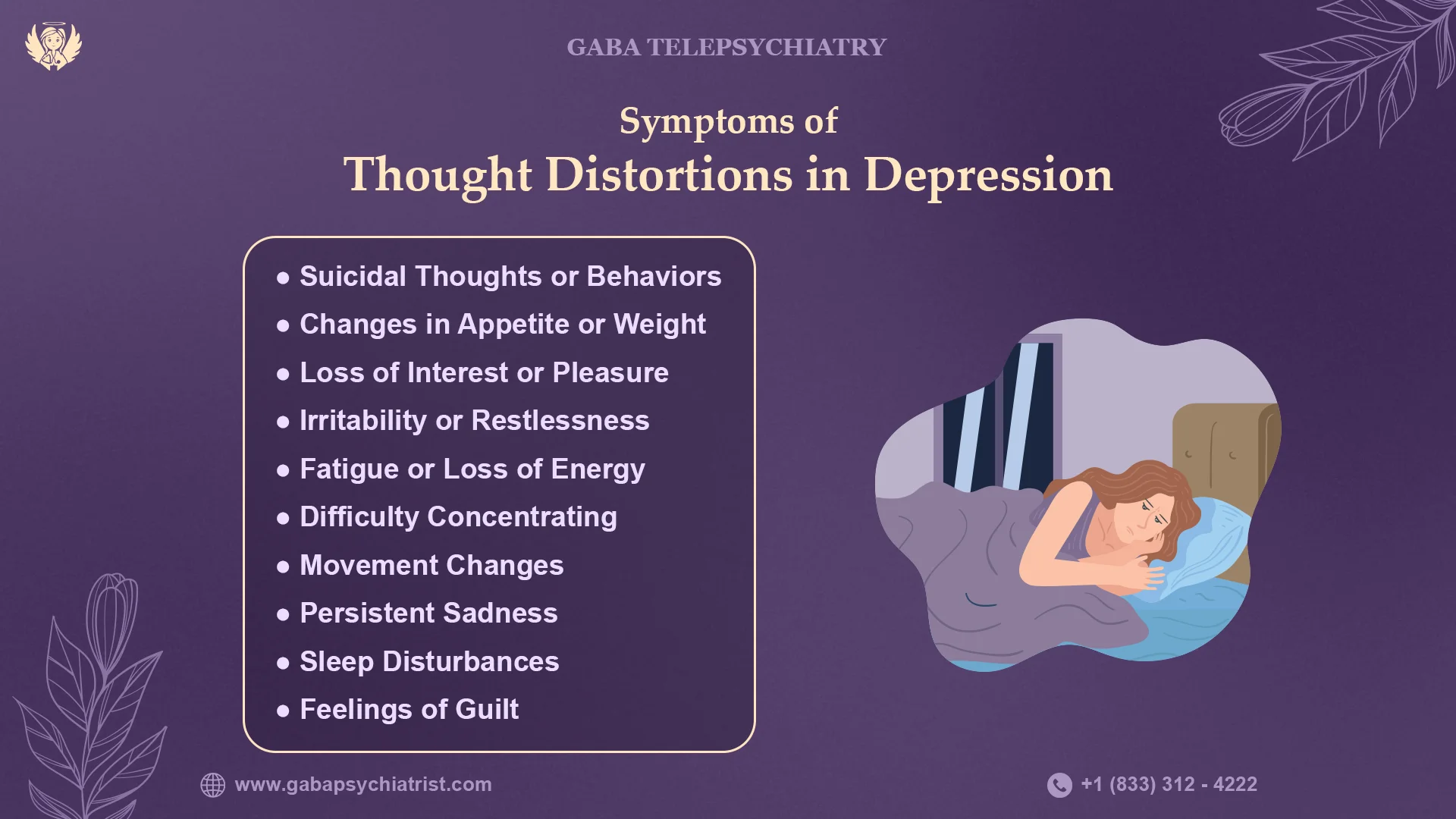
Although the symptoms of thought distortions may vary from person to- person, some of the symptoms are common in most individuals. Symptoms of thought distortions in depression include:
- Persistent Sadness– Individuals experiencing thought distortions may constantly experience bouts of low mood and feel sad, hopeless, helpless, gloomy, or defeated.
- Loss of Interest or Pleasure- Individuals with thought distortions start to lose interest in things they once enjoyed. They lose the ability to feel pleasure in activities they like.
- Changes in Appetite or Weight- Thought distortions could lead to a significant weight gain or loss. This could also result in a loss of appetite, which could be detrimental to an individual’s physical health.
- Sleep Disturbances- Sleep disturbances, due to disorganized sleep schedule could either lead to insomnia (difficulty in falling asleep or staying asleep) or hypersomnia (prolonged periods of sleep either in daytime or at nighttime).
- Fatigue or Loss of Energy- Thought distortions could lead individuals to feel physically drained due to low energy levels. This could result in fatigue or the individual may fall into the cycle of a sedentary lifestyle.
- Feelings of Guilt- Thought distortions force individuals to think about feelings of worthlessness or excessive guilt over past failures or perceived shortcomings.
- Difficulty Concentrating- Thought distortions affect the cognitive functioning which results in memory problems, difficulty in concentration, memory retention problems, and much more.
- Movement Changes- Thought distortions could lead to restlessness or agitation, which could slow down movement.
- Suicidal Thoughts or Behaviors- Thoughts distortions also lead individuals to think about death or suicide, or contemplate suicide attempts.
- Irritability or Restlessness- Individuals experiencing thought distortions feel agitated, easily annoyed, or on edge.

Control Fallacies as Thought Distortions in Depression
Control Fallacies are two contrary distortions that are related to the same belief: control. Control Fallacies could have the following effects on individuals with depression:
- Social Withdrawal
- Exacerbate Depressive Symptoms
- Intense Burnout
- Excessive Guilt or Shame
- Reduced Motivation
- Helplessness or Hopelessness
- Dependence on Others
- Neglect of Personal Needs
There are two types of control fallacies:
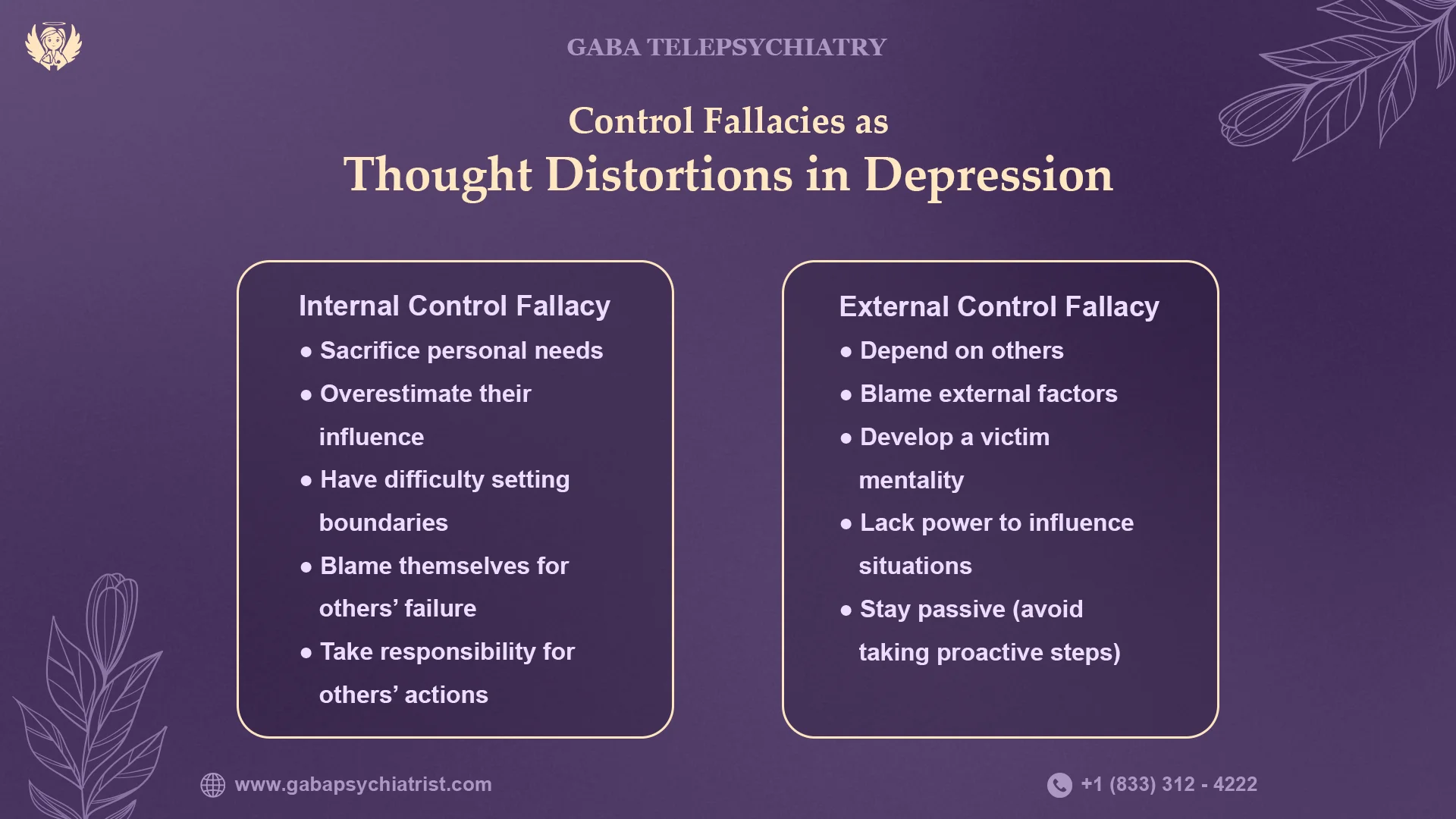
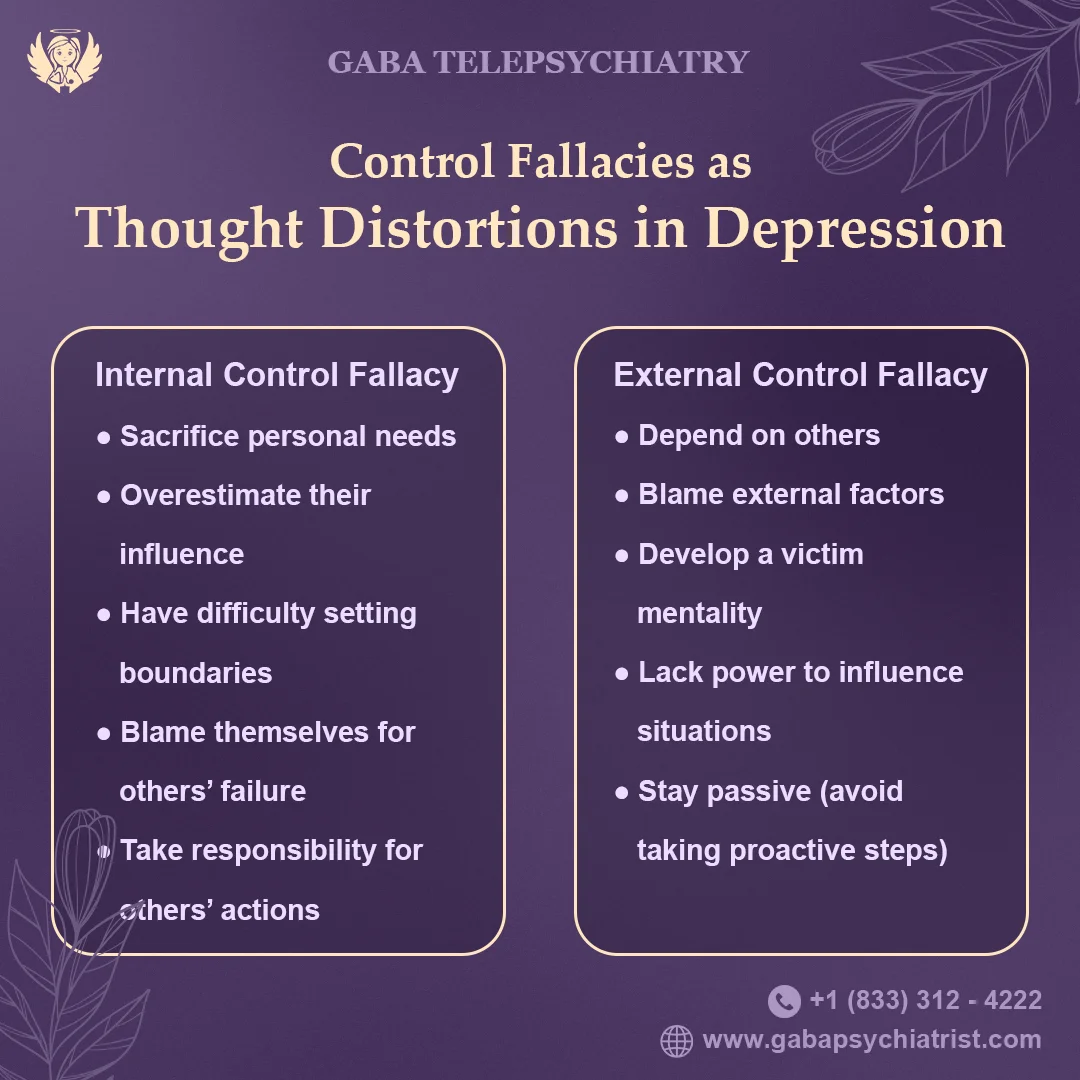
Internal Control Fallacy
Internal Control Fallacy is a distortion where individuals believe they are responsible for the feelings, actions, and outcomes that others experience. This belief could result in an overwhelming sense of responsibility and guilt, as the individuals assume that their behavior or decisions have a direct impact on the well-being of those around them.
Individuals experiencing internal control fallacy:
- Overestimate their influence
- Blame themselves for others’ failure
- Sacrifice personal needs
- Have difficulty setting boundaries
- Take responsibility for others’ actions
External Control Fallacy
External Control Fallacy is a thought distortion where individuals hold a belief that their lives are entirely controlled by external factors, and they have little to no control over their circumstances. This belief could result in feelings of helplessness, hopelessness, and pessimism as individuals perceive themselves as victims of fate, other people, or always feel that situations are beyond their control.
- Individuals experiencing external control fallacy:
- Develop a victim mentality
- Blame external factors
- Lack power to influence situations
- Depend on others
- Stay passive (avoid taking proactive steps)
Heaven’s Reward Fallacy as a Thought Distortion in Depression
Heaven’s Reward Fallacy is a thought distortion where individuals believe that their self-sacrifice and hard work will inevitably lead to a reward, often in the form of recognition, success, or happiness. When these expectations are not met, it could result in feelings of resentment, disappointment, and extreme depression.
An individual experiences Heaven’s Reward Fallacy when:
- They expect a reward for their sacrifices and hard work.
- Constantly put off their needs and interests in the hope of future rewards and success.
- Sacrifice their needs for others by prioritizing their interests and needs.
- Hold themselves to unrealistically high standards and believe that these will grant guaranteed success.
- Feel dejected and disappointed when expectations are not met.
Heaven’s Reward Fallacy could have debilitating effects. Following are its effects on individuals experiencing it:
- Increased Resentment
- Sense of Injustice
- Low Self-Esteem
- Intense Burnout
- Avoidance of Self-Care
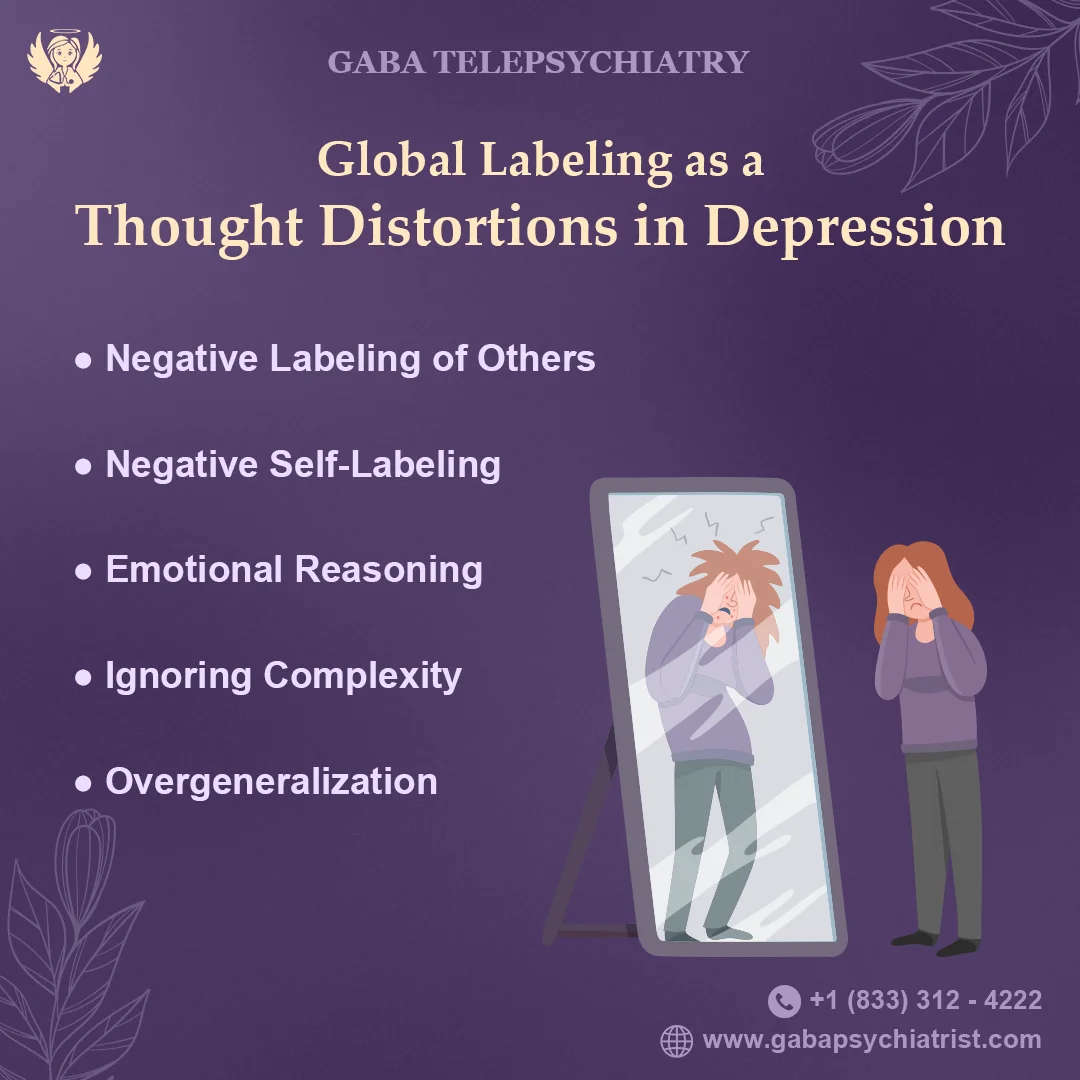
Global Labeling as a Thought Distortion in Depression
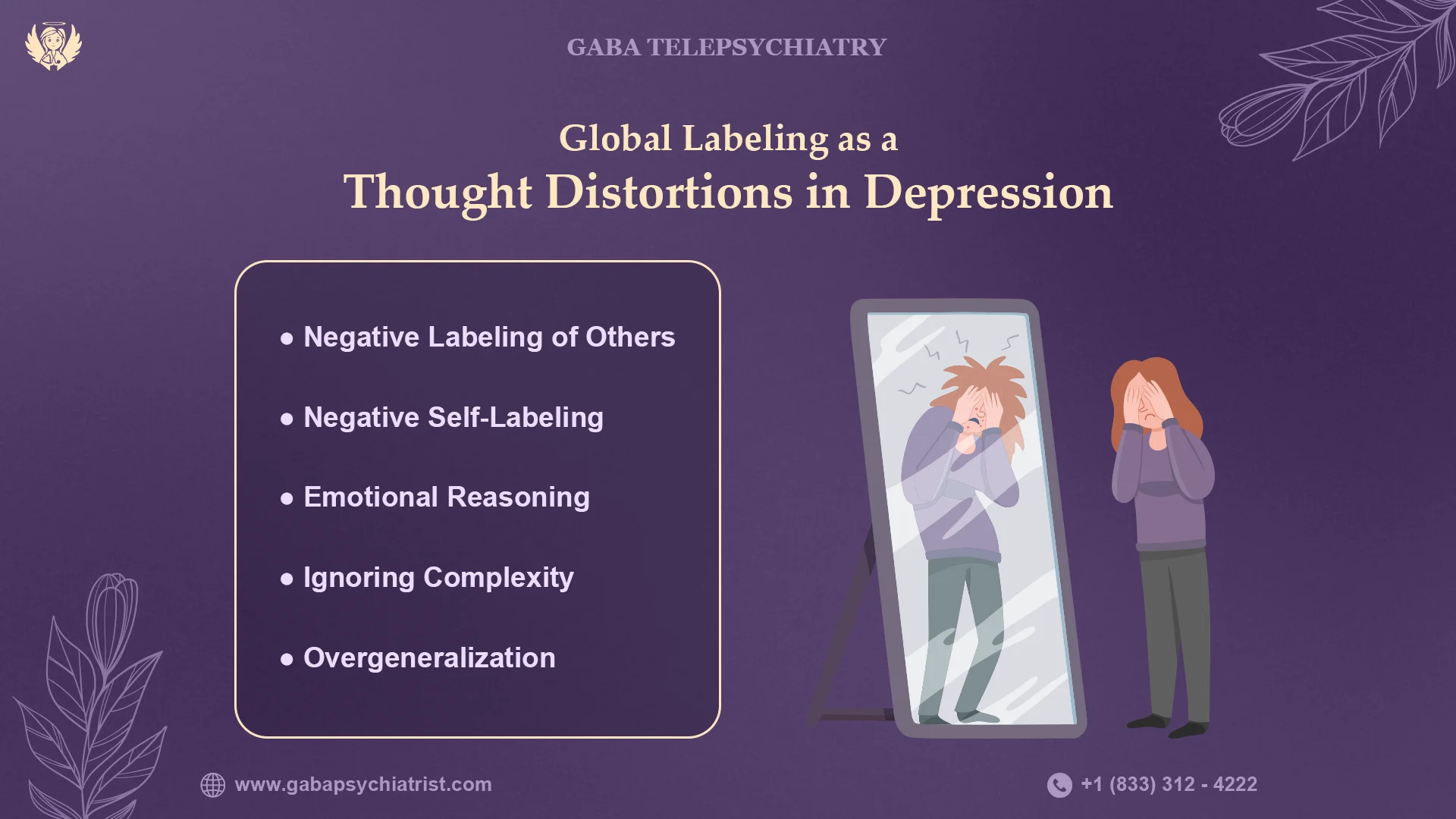
Global Labeling, also commonly called ‘mislabeling’ or ‘labeling’ is a type of thought distortion where individuals classify themselves in a negative manner based on an undesirable situation or event. They assign generic negative labels to themselves or others based on a single event.
This type of thought distortion is too basic and ignores the complexity of human behavior and characteristics. Global Labeling often leads to an exaggerated and inaccurate view of oneself or others, and leaves individuals feeling inadequate, frustrated, and depressed.
Some characteristics of Global Labeling are as follows:
- Overgeneralization
- Negative Self-Labeling
- Negative Labeling of Others
- Ignoring Complexity
- Emotional Reasoning
Global Labeling could lead to:
- Lower Self- Esteem
- Increased Depression
- Social Withdrawal
- Negative Self-Fulfilling Prophecies
- Impaired Relationships
Common Types of Thought Distortions in Depression
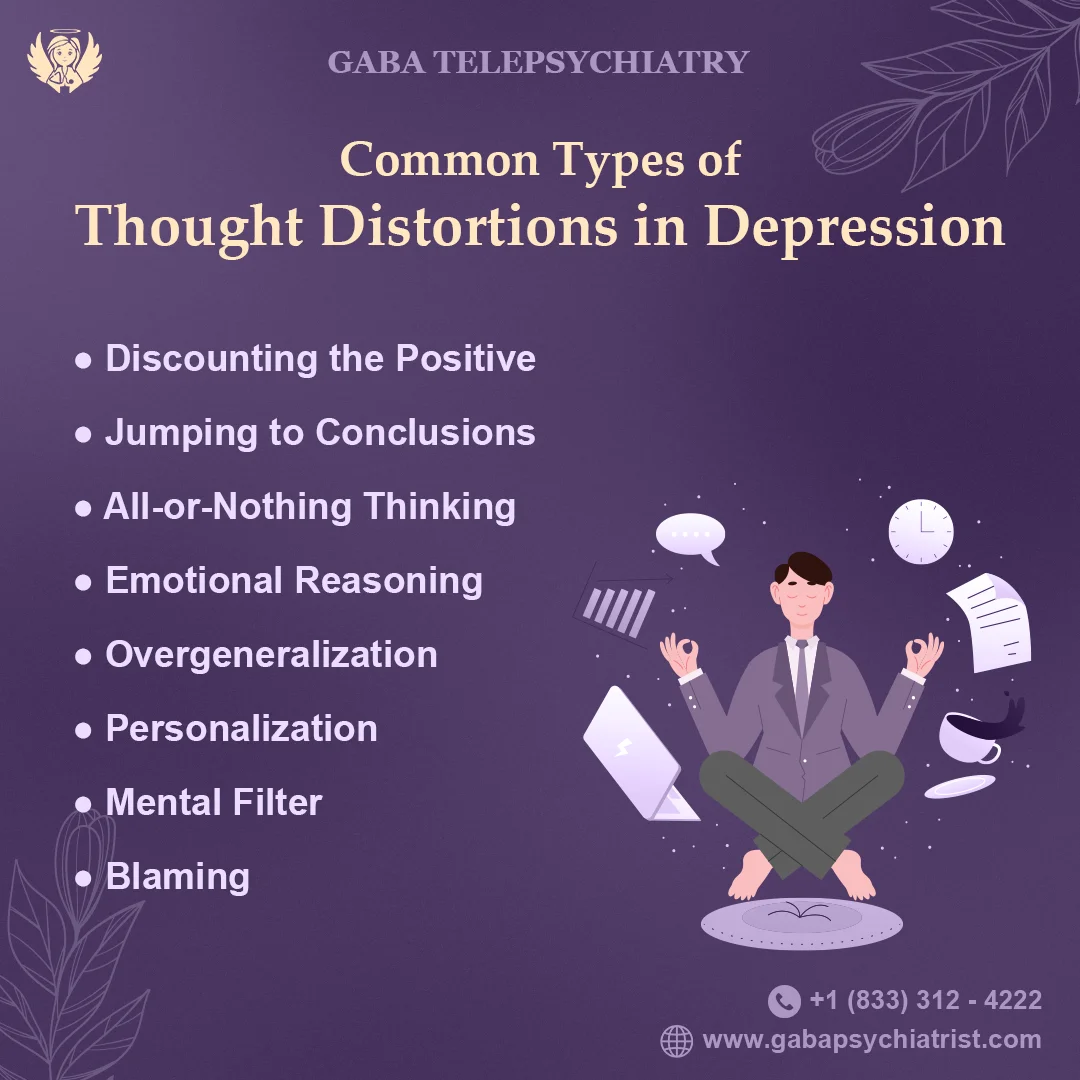
Although different individuals experience different thought distortions, there are some that are experienced by most. Following are some common thought distortions:
- All-or-Nothing Thinking- ‘All- or- nothing thinking’ distortion forces an individual to think about extreme results of situations. They do not consider a middle- ground and think that things are either bad or good. This is also called the ‘black- and- white thinking’ distortion.
- Mental Filter- Mental filter is the type of distortion that makes an individual exclusively focus on the negative aspects of a situation. They ignore the positive aspects of anything and view everything in a negative light.
- Discounting the Positive- Individuals experiencing this type of thought distortion reject or deny positive experiences or aspects of things by insisting they “don’t count” for some reason or another.
- Jumping to Conclusions- As the name suggests, this type of thought distortion forces an individual to think of the future consequences without having an actual proof or evidence. This also leads them to predict negative things for the future and think that things will turn out badly.
- Magnification and Minimization- This distortion, also known as ‘catastrophizing’ leads an individual to exaggerate the significance of certain events (magnification) or downplay the importance of others (minimization). This type of distortion could have detrimental effects on a person’s mental health.
- Emotional Reasoning- Individuals experiencing this type of distortion think that whatever they are feeling, is true. They think that their emotions reflect the reality of a situation and therefore, react to the situation on the basis of their emotions.
- Overgeneralization- Individuals experience overgeneralization when they make broad conclusions based on limited information. They often use terms like “always,” “never,” “everyone,” or “nobody.” This type of thinking could result in unrealistic and negative beliefs about things.
- “Should” Statements- Individuals experiencing this type of distortion impose strict rules on themselves or others about how things ‘should’ or ‘ought’ to be. This distortion often results in feelings of guilt, frustration, and disappointment because they create unrealistic expectations and standards.
- Labeling and Mislabeling- Labeling and Mislabeling are thought distortions where individuals assign extreme and irrational labels to themselves or others based on a single event or a small piece of proof. More often than not, these labels are negative and could be debilitating to one’s self-esteem and overall mental health.
- Personalization- Personalization is the type of thought distortion that forces an individual to believe that they are directly responsible for things or events that are not entirely within their control. This constant thought pattern could result in feelings of guilt, shame, and inadequacy, which could exacerbate the depressive symptoms.
- “Always” and “Never” Thinking- “Always” and “never” thinking, also commonly known as overgeneralization, is a common thought distortion that can profoundly affect an individual’s mental health and how they perceive themselves, others, and the world around them.
- Blaming- Blaming is one of the most common types of thought distortions. Individuals experiencing this thought distortion hold others responsible for their own pain or hold themselves responsible for others’ pain.

Causes of Thought Distortions in Depression
Thought Distortions in depression could stem from several factors including some underlying factors. Following are some causes of thought distortions in depression:
- Negative Thought Patterns- Depression often leads individuals to think along the patterns of negative thinking such as overgeneralization, black-and-white thinking, and filtering.
- Biological Factors- Imbalances in neurotransmitters which are involved in mood regulation, like serotonin and norepinephrine, could potentially result in distorted thinking patterns.
- Psychological Factors- Past negative or traumatic experiences can shape how individuals perceive current situations, which could result in distorted interpretations and beliefs.
- Environmental Stressors- Chronic stress, major life changes, or ongoing difficult circumstances could contribute to the existing stress and further exacerbate depressive symptoms, which could lead to distorted thinking.
- Social Factors- Social withdrawal, feelings of isolation, and lack of support could influence how individuals act with those around them, which could lead to distortions in thinking about relationships and self-worth.
- Nutritional Deficiencies- Lack of essential nutrients, such as omega-3 fatty acids, B vitamins, and minerals like magnesium, could affect brain function and mood regulation, which could lead to thought distortions.


Treatment for Thought Distortions in Depression
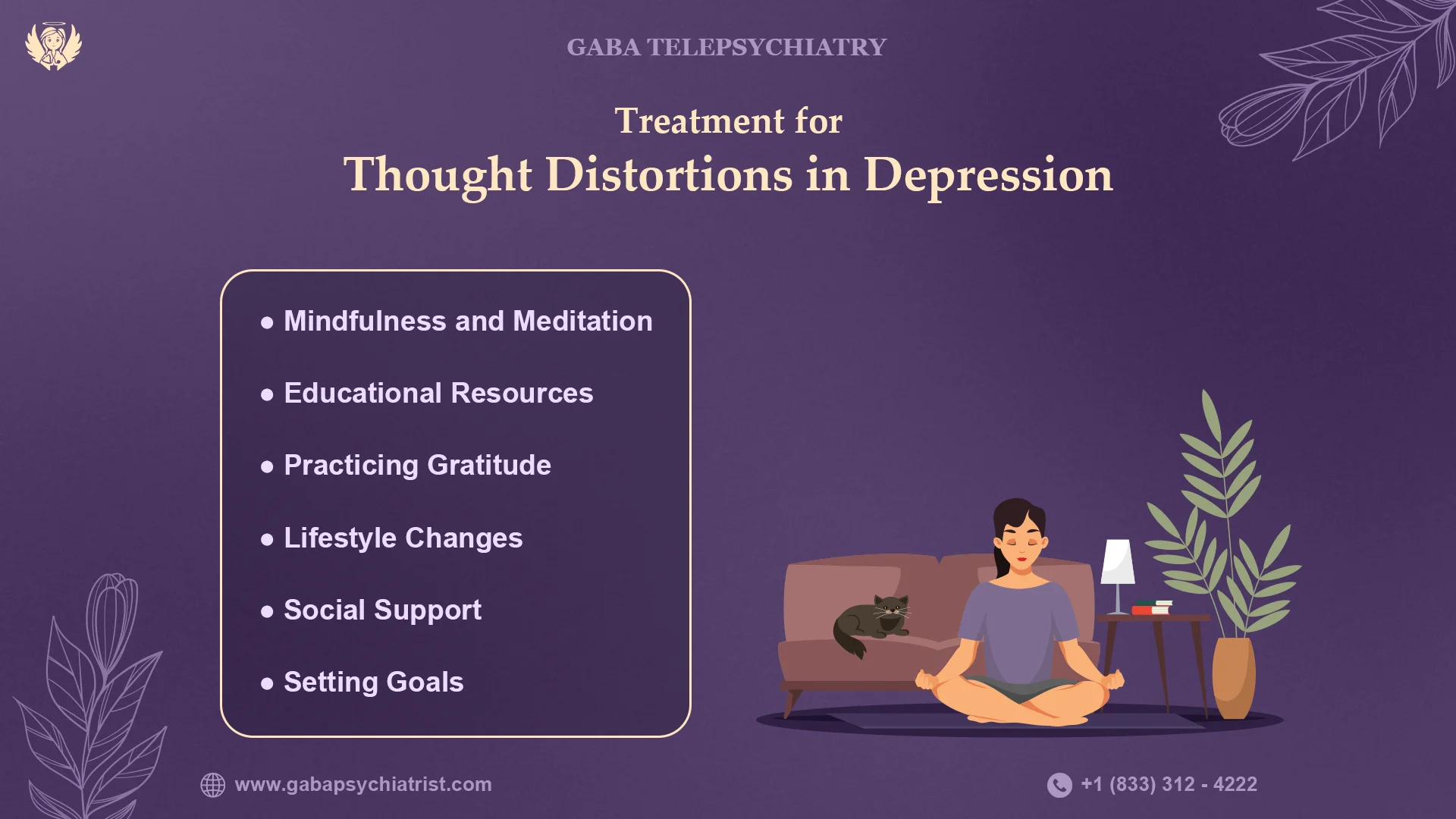
There are multiple treatment options available for thought distortions in depression. Following are some treatment options:
- Mindfulness and Meditation- Mindfulness practices help individuals become more aware of their feelings and needs. Meditation helps individuals reduce rumination, a common feature of thought distortions. It also helps them sleep better as their sleep schedules become disorganized because of depression.
- Social Support- It is crucial for individuals with thought distortions to get familial support or support from their peers. Support is beneficial for individuals with depression as it helps them to connect with those who can provide emotional support and reduce feelings of isolation.
- Educational Resources- Learning about depression and thought distortions could encourage individuals to manage and reduce negative thoughts. Reading self-help books or reliable articles online about thought distortions and how to challenge them could be beneficial to individuals with thought distortion.
- Setting Goals- Setting and achieving small, manageable goals could provide a sense of accomplishment and reduce negative thinking. Breaking down tasks into smaller, achievable steps could help individuals achieve their tasks in a manageable way.
- Practicing Gratitude- It is suggested that individuals with thought distortions maintain a journal in which they note down all the things they are grateful for. Focusing on positive aspects of life could help shift the focus from negative thoughts. It is also suggested that they share the feelings of gratitude with others as well.
- Lifestyle Changes- Letting go of the sedentary lifestyle and focusing on oneself could be beneficial for reducing negative thoughts. Exercising regularly, following a healthy diet, avoiding caffeine and other substances, and getting enough sleep are some of the ways to ensure a healthy lifestyle.

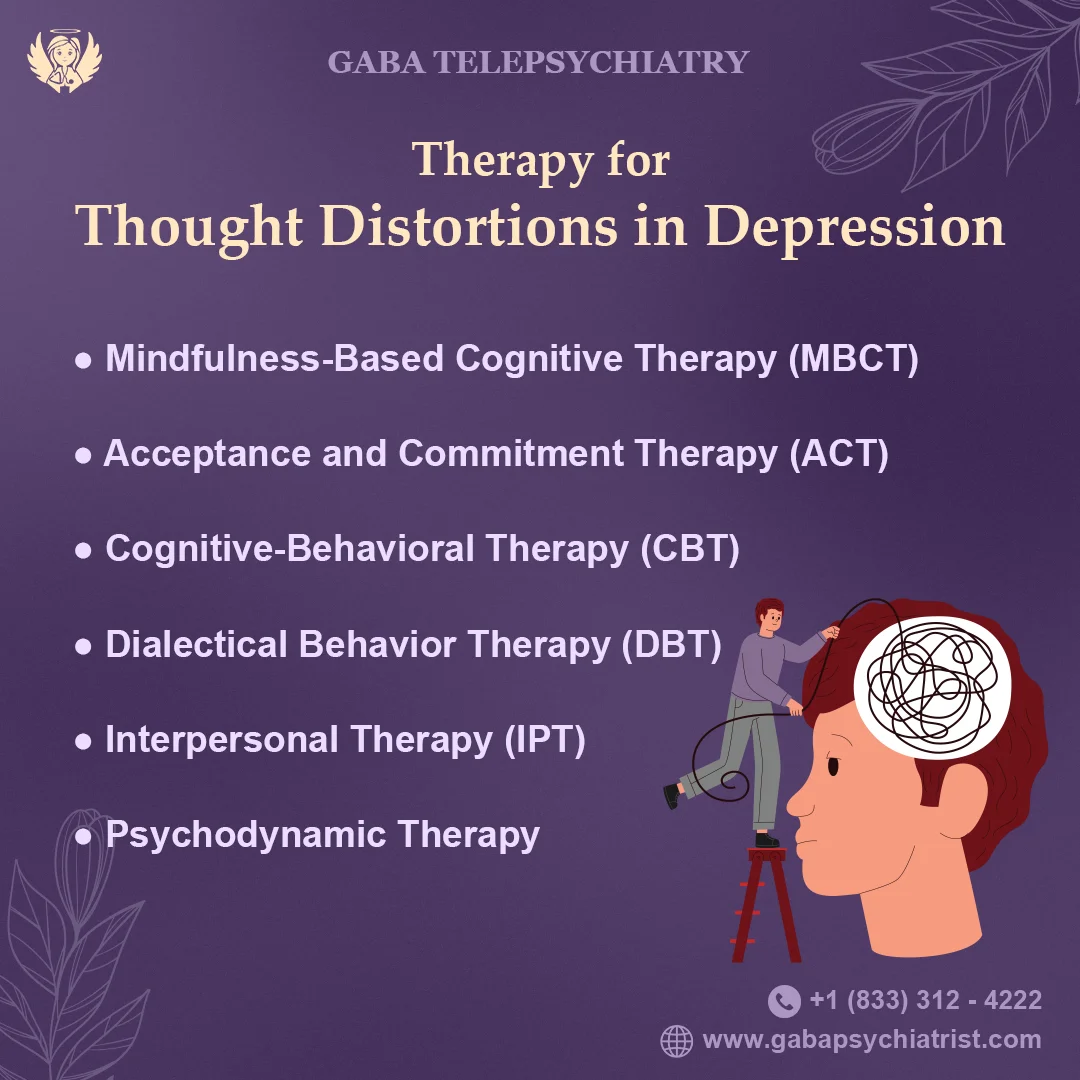
Therapy for Thought Distortions in Depression
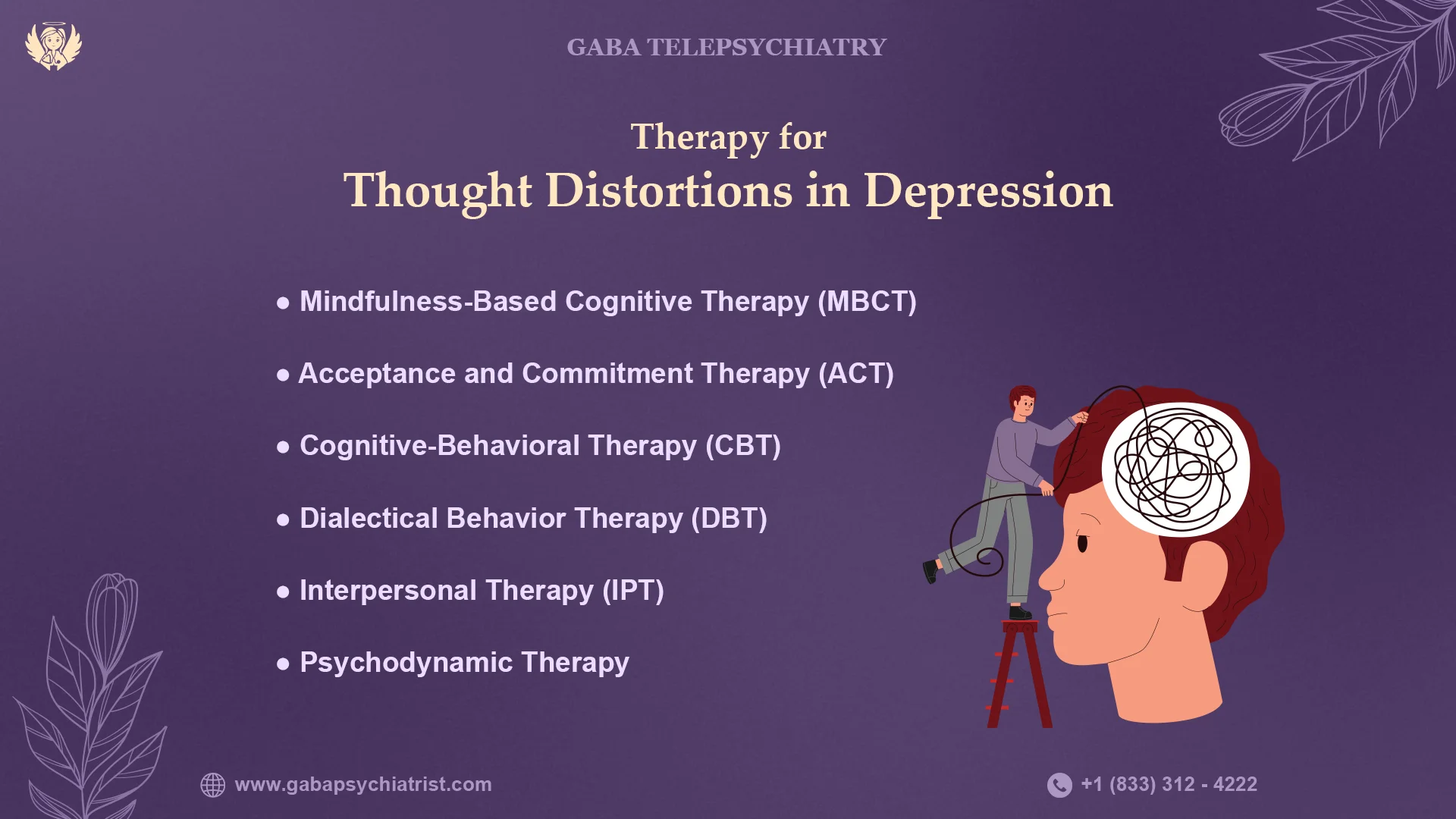
There are alternative treatment options for individuals who do not want to go for conventional treatment options. One of them is therapy. There are multiple types of therapy that could help curb thought distortions in depression:
- Cognitive-Behavioral Therapy (CBT)- Cognitive Behavioral Therapy is one of the most commonly used therapies for depression. It aims to identify, challenge, and change negative thought patterns. It helps individuals to identify distorted thoughts and beliefs and replace them with more realistic and positive ones.
- Dialectical Behavior Therapy (DBT)- Dialectical Behavioral Therapy was originally developed to treat borderline personality disorder and has now been adapted to treat depression. It combines cognitive-behavioral techniques with mindfulness practices. It encourages individuals to develop awareness of the present moment and observe thoughts without judgment. This way, individuals observe their negative thoughts and other thought distortions and therefore, try to change them into positive ones.
- Acceptance and Commitment Therapy (ACT)- Acceptance and Commitment Therapy helps individuals accept their negative thoughts and feelings rather than trying to eliminate them, and commit to actions that align with personal values. Individuals learn to see thoughts as just thoughts, which reduces their power over emotions and behaviors. ACT helps curb the ‘emotional reasoning’ thought distortions.
- Mindfulness-Based Cognitive Therapy (MBCT)- Mindfulness- Based Cognitive Therapy combines mindfulness practices with cognitive therapy techniques to prevent relapse in individuals with recurrent depression. It focuses on developing present- moment awareness and teaches individuals to accept their thoughts just as they are.
- Psychodynamic Therapy- Psychodynamic Therapy explores unconscious processes and how past experiences influence current thoughts and behaviors. This therapy is quite useful to gain an insight into unconscious unresolved conflicts or traumatic experiences and how they contribute to thought distortions.
- Interpersonal Therapy (IPT)- Interpersonal Therapy aims to improve interpersonal relationships of individuals, which could help reduce depressive symptoms and thought distortions. It aims to address issues related to grief and interpersonal conflicts.
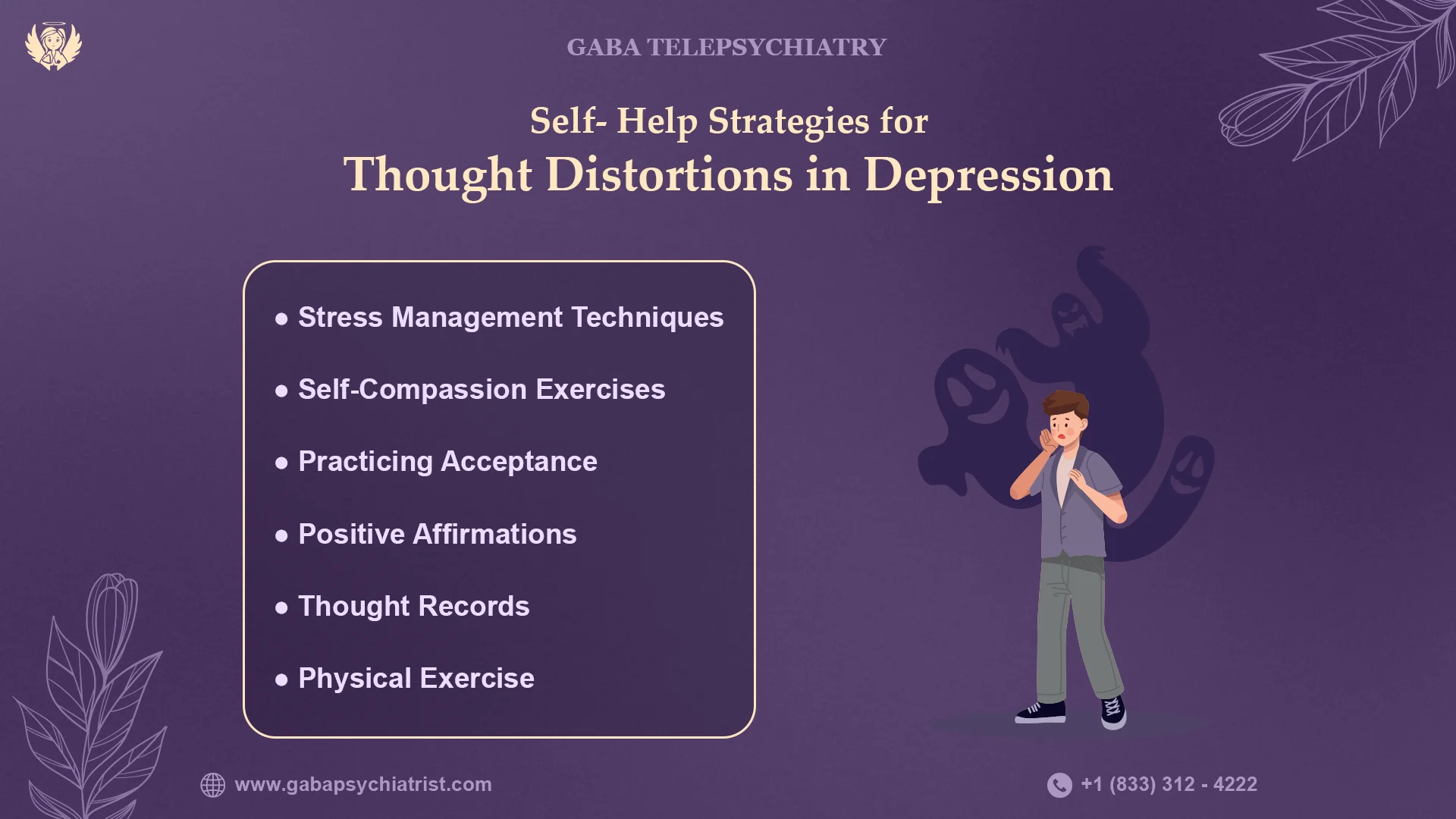
Self- Help Strategies for Thought Distortions in Depression
There are some strategies that individuals could employ on their own to manage their thought distortions. Some of them are:
- Thought Records- Individuals with thought distortions could try to maintain thought records in which they record their negative thoughts and factors that trigger them. This method could help individuals identify their trigger points and ways to overcome them.
- Positive Affirmations- Practicing positive affirmations would help counteract the negative thoughts with positive ones. This technique also helps individuals develop a positive image of themselves which could boost their confidence.
- Self-Compassion Exercises- Practicing self-compassion could help reduce harsh self-criticism. Individuals are encouraged to practice self-kindness, common humanity, and mindfulness. Talking to oneself like a friend is one way to go about the exercise.
- Physical Exercise- Physical exercises like jogging, running, or swimming could help individuals remain healthy physically as well as mentally. Physical exercise improves cognitive functioning which could reduce the intensity of thought distortions.
- Stress Management Techniques- Stress is one of the contributing factors of thought distortions. Practicing deep breathing could be beneficial for muscle relaxation. Organizing your time reduces stress and prevents feelings of overwhelm.
- Practicing Acceptance- Using mantras like “I am doing my best” or “I am enough” helps cultivate patience and self-compassion. Regularly reflecting on and celebrating small achievements and improvements could help build self- confidence and self- image.
Thought Distortions are one of the most common symptoms of depression. If you or anyone you know is experiencing these, do not hesitate to reach out for help. Early intervention could prevent the exacerbation of the depressive symptoms.
Visit our website to know more.
References
- Cognitive distortions, humor styles, and depressionThe Link Between Depression and Physical Symptoms
- How to recognize and tame your cognitive distortionsDepression
- Depressive disorder (depression)
- Cognitive distortion based explainable depression detection and analysis technologies for the adolescent internet users on social mediaDepression