
Stopping Parental Alienation
Stopping
Parental Alienation
Our board-certified psychiatrists offer trusted evaluations and compassionate support for families facing parental alienation.
Schedule An
Appointment
Find A psychiatrist

Most parents struggling with parental alienation struggle with a lack of documented proof or feel unable to persuade anyone to look at the proof or understand the proof.
Unfortunately, many alienated parents state that even their own attorney cannot understand, conceptualize, or present the evidence.
Most therapists and attorneys will tell you that it is almost impossible to stop parental alienation without a court order and professional intervention. This is because the very nature of the alienating parent is a disregard for best interest practices. Parents who have been alienated will tell you that all attempts to resolve things amicably have been sabotaged.


Why it is almost impossible to stop parental alienation without a court order
- Co-parents will not send children to visitation.
- Co-parents will claim the children do not want to come to visitation.
- Co-parents will claim that children do not want to attend therapy sessions.
- Alienated parents will report that all polite requests to stop the behavior are ignored.
- Any attempts by an alienated parent to enforce rules or discipline will lead to being told the children feel ‘afraid’ or ‘uncomfortable.’
- Over time, more and more reasons are found to reduce the alienated parent’s parenting time.
- The less parenting time, the worse the alienation gets.
- Alienated children ‘join in,’ with false allegations and threats.
- Judges and Guardians sometimes know what is going on but are afraid to take action.
- Therapists either ‘ give up’ or ‘ give in’ to threats by the alienating parent.
So how do you stop parental alienation?
- Get a Parental Alienation evaluation
- Hire a Parental Alienation Expert Witness
- Get a Court order
- Get a Court Order for Visitation.
- Have the court or the guardian implement ‘Consequences’ for noncompliance with the court order.
- Never agree to reduce your parenting time. The less your parenting time, the worse the alienation gets over time.
- Get a court order for reunification therapy. Unification therapy is often pointless without a court order, as there will always be excuses to stop or sabotage the therapy.
- Your co-parent should have a court order not to discuss you or your visitation at all with the children. Let it be out in the open that the relationship is not amicable and there is a conflict of interest.
- Your children should be court-ordered to see an individual therapist.
- While your child’s privacy should be respected, any therapist who refuses to speak to you for collateral and only speaks to one parent should be removed immediately.
- Remember, effective unification therapy takes years. Do not give up.
- Never give up educational and medical decision-making. This allows the alienating parent to coach and manipulate unqualified or inexperienced therapists.
- Never internalize the dialogue that you are ‘less than’ or that ‘your child is better off without you’.
- Try not to react to your children’s hurtful behavior, and try to make the time meaningful. Alienated parents show hurt, anger, or shut down, making the situation worse.
- In extreme cases, the only solution is to place the alienating parent on supervised visits. However, this requires professional intervention.
So How to get a court order to stop parental alienation or alienating practices?
- First, you must prove alienation is taking place: Keep all texts, emails, videos, therapy notes, CPS records, police records, and other evidence of false allegations
- Hire a parental Alienation Expert Witness
How to stop parental alienation
In order to stop Parental Alienation, you first have to prove parental alienation is happening, then ask the judge or guardian to take action.
Steps to stop parental alienation:
- Retain a parental alienation expert
- Complete a Parental Alienation Evaluation
- Get a court order
- Continue Unification Therapy
How to Stop Parental Alienation: What to look for and document?
While the evidence may be overwhelming, it is important to decipher what type of evidence can be used in court and included in a parental alienation evaluation.
Symptoms and Signs of Parental alienation include:
- Campaign of Defamation
- Making a Child feel that they have to choose between both parents
- False Accusations
- Frivolous reasons for stopping or trying to withhold parenting time.
- Limiting text messages and emails
- Teaching children to disparage the alienated parent.
- Disparaging the alienated parent in front of the children
- Withholding educational and Medical information
- Excluding coparents from Educational and medical decision-making.
Once the child becomes affected and starts showing signs of parental alienation syndrome, it is much harder to stop parental alienation.
Parental Alienation Syndrome
- Unequivocal support of one parent.
- Weak and frivolous reasons for rejecting the alienated parent.
- Unexplained violence or hostility.
- Fall in school grades, depression, or suicidality (expressions of internal conflict).
- Presence of borrowed scenarios- the child makes false accusations, believing that they really had witnessed events recounted by the alienating parent.
- Rejection extends to grandparents, extended family, godparents. And anyone associated with the alienating parent.
While parental alienation may be obvious, stopping parental alienation or proving it is challenging.
Can parental alienation be stopped?
Parental alienation can be stopped. However, not if you give up your parenting time.
Alienated parents are often amazed to find how quickly the child or children start ‘behaving normally,’ and the relationship is restored once they start spending extended periods of time together.
Stopping parental alienation means
- Increasing the time spent with your children.
- Not being afraid to restrict time with the alienating parent
- Therapeutic intervention.


What can be recorded to prove parental alienation?
- A parent may record missed parenting time
- A parent may record frequent cancellations
- Limits on communication: missed Zoom calls and phone calls.
- A campaign of defamation.
- The co-parents’ claim that a child does not want to see you is evidence.
- Withholding of Educational records: always communicate via a co-parenting app.
- CPS records are also valuable evidence of false allegations when accusations are unsubstantiated.
- Evidence that you used to have a close relationship with your child or children. Letters, texts, emails, cards, photos, videos, and witness statements can be helpful.
- Withholding of Medical Records
- Planning special events during the alienated parent’s parenting time.
- Evidence of defamation can include tests and emails,
- Text messages to the child defaming the alienated parent
- Frivolous reasons for rejecting the alienated parent.
- Malicious negotiations, the child only agrees to see the parent in exchange for gifts or money
- Text messages telling the child not to listen to the alienated parent
- Letters from friends, family, neighbors, and other witnesses
- Police records and CPS records can be valuable evidence of false allegations when there is no evidence of harm to the child, and allegations are unsubstantiated.
Sometimes the court motions themselves are riddled with false and frivolous allegations, and contain evidence that supports alienation.
What can be recorded to prove
parental alienation syndrome?
- The child starts to mirror the behavior of the alienated parent.
- Keep reunification therapy notes.
- Evidence of unexplained hostility.
- Evidence of unequivocal support of the alienated parent.
- Evidence of frivolous reasons to reject the alienating parent.
- Evidence of false allegation keep CPS and Police records.
- Keep notes of conversations with the therapist.
- Children’s therapy notes can be useful if evidence of coaching, parroting and programming.
- Evidence of emotional harm to the child, including falling grades, depression, suicidal gestures- if a child is demonstrating difficulties while under the care of the other parent, and it cannot be entirely attributed to your care.
- New onset violent behavior by the child, especially after contact with the alienating parent, is proof of the emotional impact of parental alienation.
- Particular remarks made by the other parent, alterations in the child’s behavior.
- Dates, times, interactions, and other relevant conditions that can help in identifying a pattern over time.
- A current record might be more valuable than attempting to recall months of incidents from memory once the legal procedure has started.
Keep a timeline of events with evidence
Keeping a table with the date events occurred and proof the event occurred can show patterns. For example:
Patterns of violent behavior just after seeing the alienating parent.
Social events planned during the parenting time of the alienated parent.
Escalating accusations just before court dates.
Unsubstantiated police reports
Unsubstantiated CPS allegations.
Any evidence that the child has been placed in situations where they have been forced to choose, or inappropriately included in proceedings.
Timelines can show a rapid shift in a child’s behavior or attitude towards the coparent.
Documenting that the child stops hostility and starts behaving like their old self after a period of separation from the alienating parent, eg during school holidays, or family vacations.
Key Witnesses can include :
In custody disagreements, a psychological or forensic assessment can be taken into consideration.
Based on the evaluation’s scope and court requirements, a qualified expert will:
- examine pertinent records,
- speak with family members,
- reflect on the child’s background,
- gather relevant collateral information,
- assess psychological and familial elements related to the referral question.
The purpose of this examination should be to analyze the existing evidence impartially instead of only supporting one parent’s chosen version.
Volunteer for a fitness-to-parent and risk assessment of yourself
Ultimately, you are trying to prove to the court that this is alienation and not estrangement.
- If you have no risk factors for violence, and there is no evidence that you have ever abused or neglected the child, this is significant.
- If you previously had a child, this is significant. Why is your child now rejecting you?
- If you do not suffer from a psychiatric illness that renders you unable to parent, then this should be considered. Why is your co-parent saying you are unfit?
Demonstrating that you are a fit parent is another way to demonstrate foul play. Why so much hostility? Why can both parents, not just respectfully co-parent?
Ultimately, if the psychiatric evaluation or ‘fitness to parent’ evaluation finds that you do not suffer from any psychiatric illness or personality pathology that renders you unfit to parent, then why are you being eliminated from your child’s life?
It is not your responsibility to prove that you deserve parenting time; it is the co-parent’s responsibility to come up with a valid reason why your child cannot have you as a parent.
Best interest principles suggest that in most cases, children are better off fostering a relationship with both parents after separation and divorce.
If a child is choosing to reject one loving parent in the absence of abuse, this is also sometimes evidence supporting alienation.
Parental alienation is a form of child abuse, and a child should not have an automatic right to choose.
Research shows that children fare better after separation and divorce if they are able to foster a relationship with both parents.
Often, the alienated child is in a state of confusion and the victim of coercive control. Being repeatedly exposed to alienating behaviors can cause:
- Depression
- Anxiety
- Panic attacks
- Fall in school grades
- Suicidal thoughts
How to Prove Parental Alienation
- The hardest part about proving parental alienation is that you not only have to collect proof of your co-parent’s behavior, but you also have to collect proof about your child’s behavior.
- Alienated parents are often afraid to call their children out on their behaviour, or confront their children, believing this will worsen the situation.
- It is important to try to discuss interpersonal difficulties and allegations in the presence of a co-parenting therapist.
It is even more difficult or frightening when your own child starts making allegations against you.

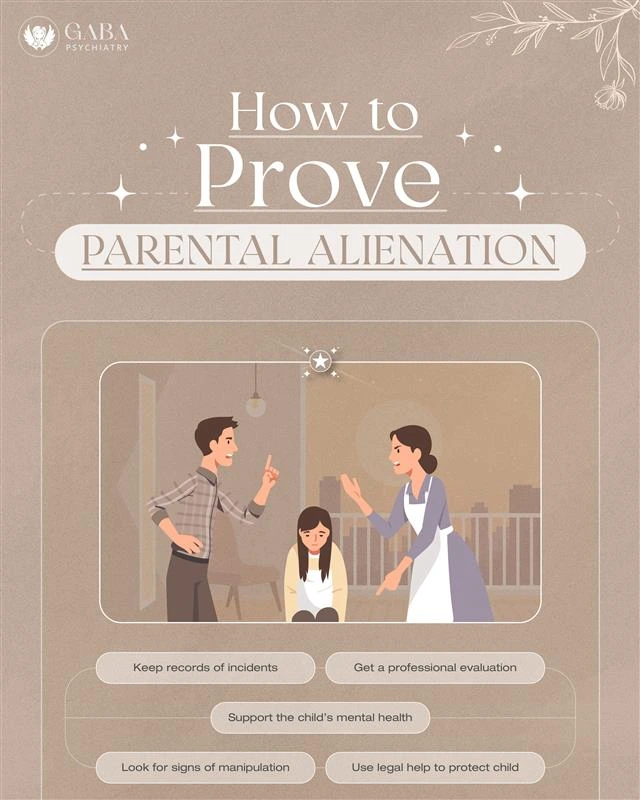
You are then placed in the uncomfortable position of claiming your child is:

This can then make you look like the person gaslighting or not acknowledging responsibility if you do not have proof.
In order to Prove Parental Alienation: collect and document evidence of parental alienation
A parent who suspects alienating behavior is happening should record incidents in an objective manner.
Rather than just stating that the other parent is “alienating” the child, it is more convincing to document what actually occurred.
How to Prove Parental Alienation in Court?
Hire an expert Witness.
Parental Alienation Experts at Gaba Telepsychiatry understand these challenges.
Parental alienation experts and Gaba Telepsychiatry
- Complete thorough evaluations
- Review the entire discovery
Psychiatrists at Gaba Telepsychiatry state that proving parental alienation in court is a team effort. They can review the evidence, incorporate the evidence into the report, and present it in a way that is easily understood by therapists, attorneys, judges, and other evaluators.
However, the parent has to do the work and collect the evidence. This is difficult because the parent is often too upset by the situation and often exhibits avoidance behaviors. The avoidance behaviors are often due to trauma and not due to a lack of caring.
Patient Advocates at Gaba Telepsychiatry play a vital role in supporting parents through the process of submitting and gathering evidence. They can also look through text threads, email threads, and therapy notes so the parent does not have to, before submitting to the psychiatrist, if a consent is signed.
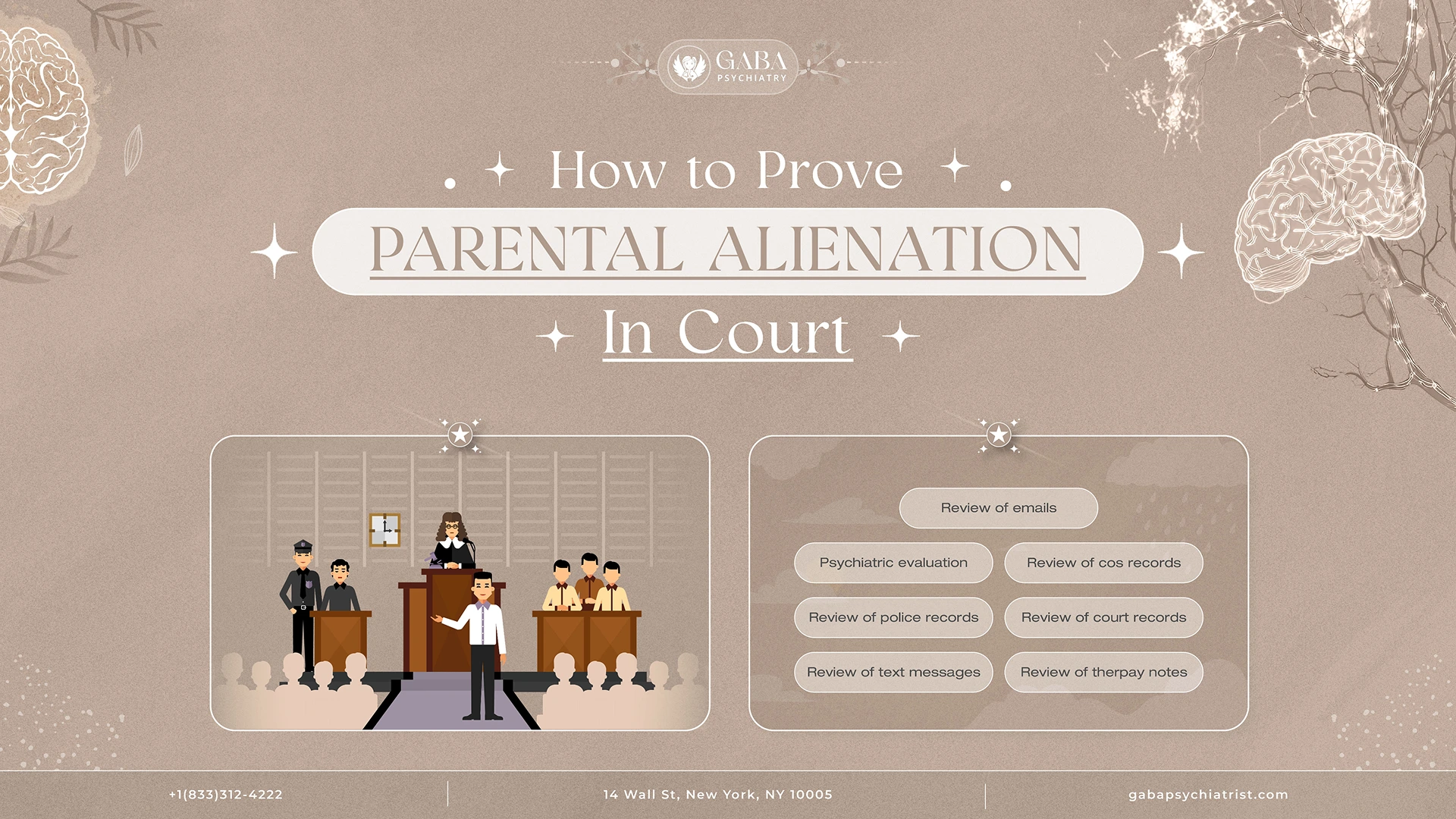

It is important not to give up.
Staff at Gaba Telepsychiatry have found that even the most pessimistic attorneys have sometimes become enthused and started approaching cases with fresh energy after reports are submitted.
Attorneys are human too and sometimes withdraw if they feel they are not helping a client, or if they do not have the tools to manage the case.
A well-thought-out report can help the attorney prepare for court and present the evidence in a way that is easily understood.
Self-care is important.
It is important that a parent does not isolate and seeks professional help throughout the process of family court proceedings at the best of times. Parents who have been alienated from their children should try to gauge as much support as possible.
- Join a support group.
- Reach out to your friends and family.
- Find a therapist.
- See a psychiatrist to address depression and anxiety symptoms.

Dr. Gundu Reddy
Board Certified Psychiatrist
with Multiple State Licenses MBBS (MD)

My name is Dr Reddy, and quite by accident, I started completing fitness to parent evaluations. During this process, I became involved with some heartbreaking parental alienation cases. As well as unification therapy, we are able to complete evaluations and consult for attorneys at a very reasonable price. The parental alienation reports save clients tens of thousands on legal fees, years in court, and a lot of heartbreak.
Often, the process goes on for years, and the child or children are already in their late teens by the time the court catches up and supervised visitation or therapy is enforced. I love parental alienation work because there is a crying need, and the chance to unite children with parents via unification therapy, helping the courts and judges understand and enforce healthy co-parenting practices.
The purpose of intervention is to prevent permanent alienation. It requires a keen eye, and experience to review all the records, text messages, emails observe behavior patterns , both with regards to alienating parents, and alienated children. We also work closely with alienated parents who often lose hope and confidence, and present with depression, anxiety, PTSD.
Many alienated parents report years of abuse during their marriage, which continues following divorce or partner separation through withholding, slander, campaign of defamation , and alienation of children. As well as counseling we teach parents not to react , and modify behaviors which may make them targets for alienation such as strict parenting, and tech parents to communicate with their children.
My team and I look forward to welcoming you to our practice.
Medical School
The United Medical Dental Schools of Guys Kings and St Thomas’ at King’s College London
Psychiatry Residency Training
Mount Sinai School of Medicine, New York
Psychodynamic Psychotherapy Training
NYU Psychoanalytic Institute
Board Certification
American Board of Psychiatry Neurology

Dr. Lynn Alison Bornfriend
Special interest in Child & Adolescent psychiatry
Psychiatrist with Multiple State Licenses (MD)

Dr Bornfriend is a triple board-certified psychiatrist with 30+ years of experience trained first with four years in adult psychiatry before completing child psychiatry and now she treats both children and adults across Illinois, South Carolina, California, Pennsylvania, Tennessee, New Jersey, North Carolina and Hawaii.
She is passionate about supporting patients dealing with a variety of disorders, including:
- Generalized Anxiety Disorder, separation anxiety, social anxiety disorder, phobias, panic disorder
- Mood Disorders, disruptive mood dysregulation disorder, major depressive disorder, premenstrual dysphoric disorder, bipolar affective disorder and cyclothymia
- OCD, body dysmorphic disorder, trichotillomania, excoriation
- Autism Spectrum Disorder
Reactive Attachment Disorder, adoption-related issues - PTSD, acute stress disorder, adjustment disorder, prolonged grief disorder
- Oppositional Defiant
- Disorder, intermittent explosive disorder, conduct disorder
- Eating Disorders, Sleep Disorders
- Gender Dysphoria
- Substance Dependence and Abuse
- Psychiatric Disorders Secondary to Medical Illness
Dr Bornfriend considers all symptoms presented through the lens of the individual patient’s developmental stage, while also evaluating the impact of family dynamics, environment, academic experience, and developmental/genetic variants. She understands the shift in the importance of autonomy and self-determination as the child grows towards adulthood, assisting the patient and his/her family with active empathic listening and respectful communication.
She has worked with children and adolescents as well as their families, their schools, and the court systems in a variety of modalities from evaluation and diagnosis, medication management, and individual and family therapies, from a supportive, insight-oriented, and CBT/DBT and other modalities.
Dr Bornfriend’s patients have appreciated her varied experiences and training throughout her career. They appreciate her creativity, her warmth, her humor, her intellectual curiosity, and her ability to connect with a wide variety of patients, despite varied backgrounds and levels of psychological mindedness. She has formed long-term, long-lasting relationships with patients, which have hada dramatic impact on their current life experiences as well as their futures.
Medical School:
Pennsylvania State College of Medicine–Hershey, PA
Psychiatric Residency Program:
Timberlawn Psychiatric Hospital–Dallas, TX
Child and Adolescent Psychiatry Fellowship:
Timberlawn Psychiatric Hospital–Dallas, TX
Board Certifications (American Board of Psychiatry and Neurology):
Psychiatry; Child and Adolescent Psychiatry; Forensic Psychiatry
Currently licensed in IL, SC, CA, PA, TN, NJ, NC and HI.

Dr. Beena Saad
Triple Board Certified Psychiatrist
with Multiple State Licenses (MD)

Dr. Beena Saad is a triple board-certified child and adult psychiatrist with extensive experience in forensic evaluations. Dr. Saad received her child psychiatry fellowship training from the University of New Mexico and child psychosomatic medicine fellowship training from Montefiore Medical Center/Albert Einstein College of Medicine.
Dr. Saad conducts evaluations related to parental alienation cases, including those that involve a child potentially becoming estranged from a parent. Dr. Saad will listen intently to the concerns brought by the family and review the family history, the relationship between the child and both parents, and any other potential causes for the behaviors of the child.
While conducting a parental alienation evaluation, Dr. Saad includes:
- An understanding of the nature of the relationship between the child and both parents.
- A review of the family history and the concerns raised by both parents.
- An assessment as to whether any actions taken by a parent might affect the child’s relationship with the other parent.
- Identification of other possible causes for the resistance felt by the child toward a parent.
- Evaluation of the emotional needs of the child.
With professional integrity, patience, and attention to detail, she devotes her time to comprehensively understanding the individual before making any judgments. Every analysis that Dr. Saad undertakes involves a compassionate, objective, and respectful approach to ensure that her clients feel understood in the process.
Dr. Saad is able to clearly convey information related to parental alienation evaluations. It is important to note that she is keen on updating herself on current research and thus regularly reviews medical literature. Dr. Saad aims to produce credible and comprehensive evaluations that will be of great help when making decisions during difficult times.
Schedule an Appointment with our Online Psychiatrists
Clinical Services: California, Florida, Illinois, New Jersey, New York, South Carolina, Tennessee , Long Island
Forensic Psychiatry Services: All of the US and Canada


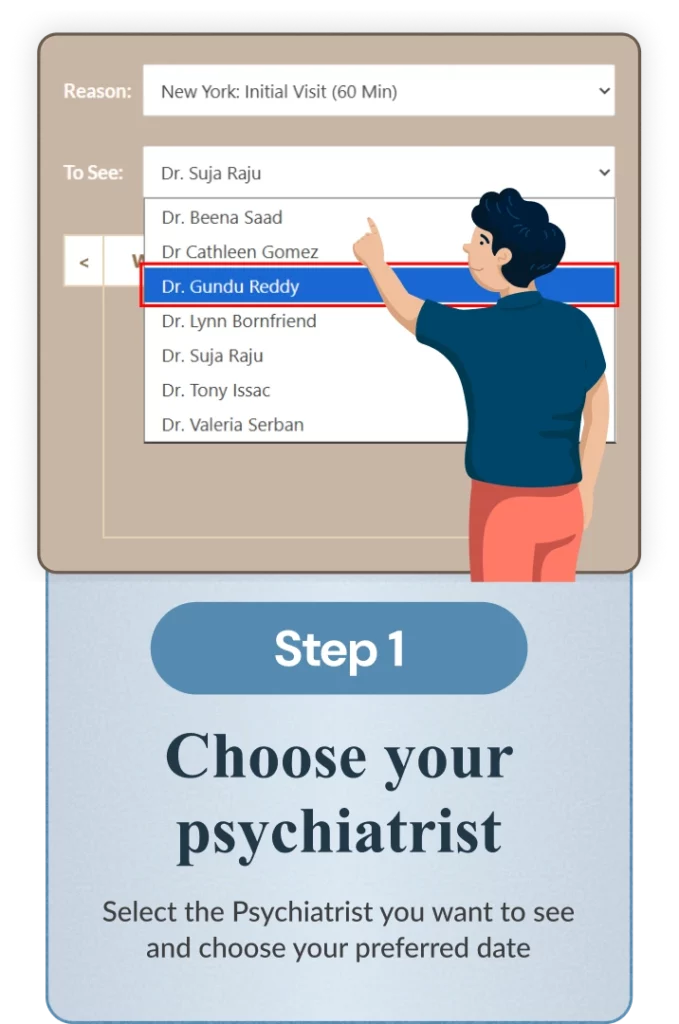
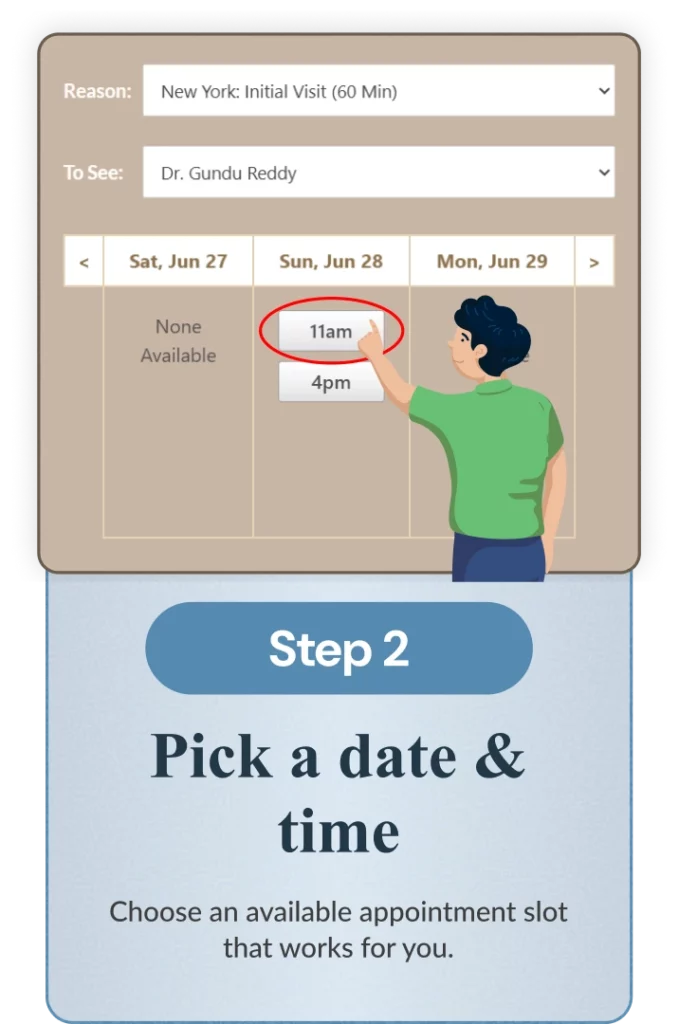
Book Your Appointment in 5 Easy Steps








| State | Dr. Beena Saad | Dr. Tony Issac | Dr. Valeria Serban | Dr. Lynn Alison Bornfriend | Dr. Cathleen Gomez | Dr. Gundu Reddy | Dr. Suja Raju |
|---|---|---|---|---|---|---|---|
| California | Yes | – | Yes | Yes | – | Yes | – |
| Illinois | – | – | Yes | Yes | – | Yes | – |
| Florida | – | – | – | – | Yes | Yes | – |
| New Jersey | – | Yes | Yes | Yes | – | Yes | – |
| New York | Yes | Yes | Yes | – | Yes | Yes | Yes |
| South Carolina | – | – | Yes | Yes | – | Yes | Yes |
| North Carolina | Yes | – | – | Yes | – | Yes | Yes |
| Tennessee | – | – | – | Yes | – | Yes | Yes |
If you need help scheduling or have more questions,
Please call 18333124222 and ask for a patient advocate or forensic co-ordinator.
Our Trusted Clients

I am an attorney in Missoula, MT. I had the pleasure of working with Dr. Reddy in a divorce action. She was thorough and prompt. I would…Read More
highly recommend her as a huge advocate for your client in common.
Dr Reddy’s word in your FAA medical cases carries some heavy weight. She is a consummate professional and is extremely knowledgeable in every aspect of maneuvering the obstacles that are in place. She was able to get me back up and flying within 3 months! This was not an easy task, however due to her expertise, she was able to produce the correct and desired responses from the agency …Read More
and highlight definitive facts which supported my claims, thus returning me to the job and my passion. Without her, it would not have been possible! I know this as a fact because I have a friend who was in the same situation, who used another service provider that could not convince the agency based upon his claims and was permanently grounded. I highly recommend and will continue to utilize Dr. Reddy!!!!!!!
FAQ
A parental alienation expert is completing an evaluation for the court, not providing treatment, so does not have to be local.
A Parental Alienation Specialist can provide an Expert evaluation for Court. They review the entire file, screen for estrangement, and put the findings into a report that attorneys, therapists and judges can follow.
Parental alienation cases are seldom won on a single piece of evidence. Records, witness statements, family history, and the evaluator’s findings need to line up and tell the same story. When they do, the court has a much clearer basis for decisions about custody and the child’s emotional well-being. A parental alienation expert witness can also explain those findings to the judge in plain terms.
A best interest evaluation can sometimes be rushed, and not all the evidence is looked at. As a result, the evaluator may accept complaints made by the children and co-parent at face value and not dive deeper.
When parental alienation is suspected, it is usually better to get a parental alienation evaluation prior to a best interest evaluation.
- A parental alienation evaluation will document evidence of alienation.
- Screen for evidence of estrangement as opposed to alienation.
- Review the evidence in detail.
- Therefore, the best interest evaluator will have a perspective on what may be happening.
If a child is coached or manipulated to say that they want to live with the alienating parent, then the best interest evaluator may accept this at face value, leading to the alienated parent losing parenting time, or even being placed on supervised visits if false allegations are made.
Therefore, it is always better to seek an alienation evaluation as well as a best interest evaluation when alienation is suspected.
- Collect Proof
- Complete a Parental Alienation Evaluation
- Get a Court order
- Don’t be afraid to ask for full custody if needed
- Do not give up your parenting time
- Do not stop unification therapy
- Get a co -parenting therapist
- A guardian ad litem can sometimes help
- Push for consequences if the co-parent does not stop alienating behavior.
Financing Partners
During legal issues, high stress levels can cause a mental breakdown. The additional expense of the legal fees can make the situation worse than it already is. Mostly, individuals find themselves in the middle of dealing with the pressure of costs and financial burden.
To help reduce the burden, Gaba Telepsychiatry works with financing partners who offer flexible payment arrangements with short-term options for eligible people.
If interested in learning more about our financing options, please feel free to talk to one of our patient advocates, as they can help you understand the available options to find out which option works best for you
A person with bad credit due to legal fees but a good payment history, may still be eligible for financing and payment plans, but the rates would be typically higher. In some cases we have in house payment plans, but not if there are court dealings.



Help for Parental Alienation
Expert witness testimony: Most attorneys are not trained to understand, conceptualize, or present the evidence of alienation. A Parental Alienation Expert Witness reviews the entire file, screens for estrangement, and explains the findings in terms a judge can follow.
Co-parenting therapist: A co-parenting therapist gives both parents a place to discuss schedules, communication, and keeping the children out of the middle.
Unification therapist: Unification therapy best serves its purpose when court-ordered often because there will be excuses to stop the sessions. Choose an experienced parental alienation therapist who will not give up, as effective unification therapy takes years of work.
Guardian at litem: A guardian at litem speaks to both parents, the child, teachers, and therapists, then reports to the court.
Support of other parents and support groups: Without support, it is hard to keep up. Parents who have been through alienation know that the process feels very heavy and is generally toll taking.
Parental Alienation Support Groups
Talking to other parents can be extremely helpful when looking for resources to help fight or stop parental alienation.
Without support, it is very hard not to give up. If there are no support groups in your area, consider online resources:

