
Dementia
Board-Certified psychiatrist specializing in dementia offers immediate help, including dementia medication and treatment. Contact +1(833)312-4222 for assistance.
Make an Appointment

Although there are progressive and severe forms of dementia, such as Alzheimer’s dementia, most forms of dementia progress slowly and are preventable or even reversible.
This is why early treatment of dementia diagnosis and early dementia treatment is critical to prevent progression and improve quality of life.
Even the most severe forms of dementia respond to dementia to some degree. Psychiatric complications of dementia, such as anxiety, depression, insomnia, and agitation, usually respond to medication and therapy even if cognitive symptoms persist.
Why is dementia evaluation important?
Conscientious dementia evaluation and prompt dementia treatment are essential for the following reasons:
- To confirm a dementia diagnosis or diagnose dementia accurately
- To exclude other medical diagnoses
- Identify and treat reversible causes of dementia
- Treat complications of dementia and provide supportive care.
- Some forms of dementia, such as vascular dementia, progress slowly, and progression is somewhat preventable or can be slowed down with appropriate care.
- Many forms of dementia, such as pseudodementia or dementia due to nutritional deficiencies and metabolic conditions, are not only treatable but reversible, and patients experience a rapid improvement in cognitive functioning with treatment.
- Access to benefits and services.
- Treating psychiatric symptoms associated with dementia, such as anxiety, depression, insomnia, and agitation, can dramatically improve quality of life.
When is dementia treatment required?
While some memory loss and cognitive decline is normal as we get older, signs of more serious decline or dementia include :-
- Confusion
- Others are noticing difficulties
- Difficulty reading
- Forgetting friends and relatives
- Not knowing the date
- Getting lost easily
- Extreme difficulty with things that you used to do easily
- Difficulty with simple tasks such as paying bills.
What is the definition of dementia?
‘Progressive cognitive decline for more than three months.’ The difference between memory loss and dementia is that dementia is progressive and gets worse over time.
Is dementia reversible ?
There are many reversible and treatable forms of dementia:
- Anxiety
- Depression: pseudodementia or dementia secondary to depression is treatable .. Pseudodementia is commonly mistaken for Alzheimer’s in the elderly.
- Nutritional deficiencies: B12 and B1 deficiency is often mistaken for Alzheimer’s in the elderly.
- Chronic sleep deprivation or sleep apnea can cause cognitive difficulties.
- Endocrine disease, thyroid disease, or pituitary tumors can cause dementia-like symptoms in the elderly and are treatable.
- Alcohol abuse can be mistaken for Alzheimer’s dementia in the elderly.
- Certain medications, especially sleep medications, can cause delirium and confusion in the elderly. Medication-induced delirium is often mistaken for dementia in the elderly.
Not all forms of dementia are serious, and many types of dementia are treatable.
Sometimes, the fear of cognitive decline and anxiety about testing can be worse than the memory loss itself. It is important for anyone experiencing dementia-like symptoms, such as memory loss or any form of cognitive decline, to schedule an evaluation.
Is dementia preventable ?
The most common cause of dementia in the elderly is microvascular dementia. Microvascular dementia is usually preventable, by
- Strict control of metabolic syndrome,
- Blood-thinning agents.
- Treat Cardiac arrhythmias
- Carotid Doppler monitoring
Microvascular dementia is caused by small clots in the capillaries or small blood vessels. Progression is to a large degree preventable.
Reasons for a Dementia Evaluation?
- To establish if a person has dementia
- To establish the underlying cause of dementia or cognitive decline
- To treat any reversible causes of dementia or memory loss
- To treat any conditions that mimic dementia or cognitive decline
- To initiate treatment and slow the progression of any irreversible causes of dementia
- To provide support to patients and families with a more serious dementia diagnosis.
- To assist with paperwork for the initiation of services such as home help.
- To assist with long-term planning.
What if I have Alzheimer’s dementia?
Alzheimer’s dementia is not the end. Alzheimer’s dementia takes several years to progress. In the meantime, individuals can continue to live with their families and enjoy the things they have always enjoyed. Treatment and support of both patients and family are important as the illness progresses. Often, it is the complications of Alzheimer’s, such as depression, apathy, insomnia, anxiety, and behavioral disturbances can be worse than the cognitive decline. These symptoms are treatable, and specialized treatment is required.
Retirement should be the best time of one’s life, free from the obligations of work and raising a family, and the time when people are free to pursue their hobbies, interests, and personal and spiritual goals.
Although most forms of cognitive decline are either mild or treatable, a more serious diagnosis such as Alzheimer’s can be frightening or overwhelming, and support is needed for both patients and families.

Our Trusted Clients

I am very happy I have found a Dr Reddy , since she is really good and has help me a lot . She has listen to all of my concerns and prescribed the right medication…Read More
for me and her office goes above and beyond every time I call.
Before seeking the help of Dr. Reddy, my experience with the mental health profession was a system that seemed quick to prejudge. Dr. Reddy is patient and takes the time to understand…. Read More
situations from all perspectives. I recommend Dr. Reddy to anyone who wants to speak to a professional who is willing to listen and also omitted to help people.
Dementia Psychiatrist
Dementia affects memory, thinking abilities, and day-to-day functioning, and getting the right treatment can make a significant impact in your life. Our Board Certified Psychiatrists specialize in evaluating changes and understanding the different causes of cognitive decline, including reversible contributors like nutritional imbalances or mood-related cognitive issues versus progressive conditions like Alzheimer’s.
Dementia can be overwhelming, but here at GABA treatment include medication management to address psychiatric symptoms such as anxiety, depression, agitation, or sleep disturbance. From early signs to subtle changes, our board-certified psychiatrists at GABA pay close attention to emotional and behavioral changes that usually go unnoticed and often misunderstood. At GABA, our Board Certified Psychiatrists work compassionately to provide an individualized plan to support overall well-being.
Dementia Neurologist

Dr. Tony Issac
Board Certified Psychiatrist in New York & New Jersey (MD)

Licensed in: New York & New Jersey
Dr. Tony Issac is a highly experienced double-board-certified psychiatrist who specializes in evaluating and treating a broad range of mental health conditions, including insomnia, panic attacks, depression, anxiety, OCD, bipolar disorder, and schizophrenia.
Dr. Issac focuses on addiction recovery and medication management. He employs a balanced approach, integrating psychotherapy with careful medication titration to create personalized treatment plans.
Dr. Issac’s patients admire him for his kindness, empathy, and attentiveness. He provides a safe, supportive space for them, and is especially skilled in conducting suicide assessments and acute stabilization. In these critical situations, he collaborates closely with the patient’s family and, when needed, their employer, to ensure comprehensive care and support.
Medical School
St. George’s University: School of Medicine
Psychiatry Residency Training
Richmond University Medical Center: affiliate of Mount Sinai Health Network
Bachelors of Science (B.S.) in Psychobiology
Binghamton University – State University of New York
Board Certification
American Board of Preventative Medicine – Addiction Medicine, Board Certification
American Board of Psychiatry & Neurology – Psychiatry, Board Certification
Registered State Licenses
- NJ – 25MA10472200
- NY – 296251

Dr. Suja Raju
Board certified Psychiatrist (MD)

Licensed in: New York, NC, SC.
Dr. Raju is a board-certified psychiatrist with more than nine years of clinical experience, certified by the American Board of Psychiatry and Neurology. She specializes in the comprehensive treatment of a wide range of psychiatric conditions, including depression, anxiety disorders, bipolar disorder, obsessive–compulsive disorder (OCD), attention-deficit/hyperactivity disorder (ADHD), post-traumatic stress disorder (PTSD), and schizophrenia.
With a strong commitment to delivering personalized, patient-centered care, Dr. Raju provides expertise in medication management, evidence-based psychotherapy, and thoughtful, sensitive medication titration. She has particular clinical interest and passion in women’s mental health and trauma-related disorders, striving to support and empower her patients through every stage of their healing journey.
Medical School
Universal College of Medical Sciences, Nepal
Psychiatry Residency Program
Mount Sinai School of Medicine Elmhurst
Program, New York
Board Certification
American Board of Psychiatry and Neurology
Adult Psychiatry
Language spoken
English and Malayalam
I had my first evaluation meeting with Dr Raju, she is really smart and understanding. I look forward to more meetings. I’m confident I will get an accurate evaluation report.

Dr. Gundu Reddy
Board Certified Psychiatrist
with Multiple State Licenses MBBS (MD)

Licensed in: NY, NJ, California, Florida, Tennessee, Illinois, North Carolina and South Carolina
Dr. Gundu Reddy is a board-certified psychiatrist with over 15 years of clinical psychiatry experience and a decade of expertise in forensic psychiatry. She is well-versed in medication management, psychodynamic psychotherapy, and cognitive behavioral therapy.
Dr. Reddy has a strong interest in integrative psychiatry and adopts a holistic approach when evaluating and treating her patients. She considers a wide range of factors, including genetics, developmental history, medical conditions, nutrition, hormonal imbalances, and environmental influences to provide comprehensive care.
Dr. Reddy emphasizes the importance of understanding underlying psychodynamic conflicts and the root causes of symptoms when developing treatment plans. This nuanced approach enhances the effectiveness of medication management and therapy, whether it involves individual, family, or relationship counseling. Additionally, she has significant experience in managing treatment-resistant cases and incorporates her expertise in integrative psychiatry to address complex patient needs.
Medical School
The United Medical Dental Schools of Guys Kings and St Thomas’ at King’s College London
Psychiatry Residency Training
Mount Sinai School of Medicine, New York
Psychodynamic Psychotherapy Training
NYU Psychoanalytic Institute
Board Certification
American Board of Psychiatry Neurology
Same Day Psychiatrist Appointment
Registered State Licenses –
- NY – 260173
- TN – 58783
- NC: 2026-01787
- SC – MMD.81938
- SC – “DHEC South Carolina Department of Health and EnvironmentaL 2081938”
- IL – 036151599
- CA – 168663
- NJ – 25MA11183400
- FL – ME148850
I am very happy I have found a Dr Reddy , since she is really good and has help me a lot . She has listen to all of my concerns and prescribed the right medication for me and her office goes above and beyond every time I call .

Dr. Valeria Serban
Board Certified Psychiatrist
with Multiple State Licenses MBBS (MD)
Licensed in: New York, New Jersey, California, Illinois, Florida, North Carolina and South Carolina
Dr. Valeria Serban is a board-certified Neurologist with extensive experience in Psychiatry and Neurology, certified by the American Board of Psychiatry and Neurology. Her approach to mental health care integrates neurological, structural, and physiological insights.
With over 20 years of experience, Dr. Serban specializes in diagnosing and treating a wide range of psychiatric conditions, including anxiety, bipolar disorder, depression, dementia, OCD, mood disorders, panic disorder, postpartum depression, and psychosis. Dr. Serban also has a strong background in general adult and geriatric psychiatry, and she frequently addresses psychiatric symptoms related to neurological conditions such as migraines, epilepsy, stroke, multiple sclerosis, Parkinson’s disease, and sleep disorders like narcolepsy.
Known for her compassionate and patient-centered care, Dr. Serban ensures a safe, welcoming environment where patients feel comfortable and supported throughout their treatment. She continually explores innovative therapies to provide the best care options in collaboration with patients and their families.
In addition to her clinical expertise, Dr. Serban is fluent in six languages: English, Romanian, Italian, French and German, enhancing her ability to connect with patients from diverse backgrounds.
Medical School
University of Medicine and Pharmacy “Carol Davila” Bucharest, Romania
Neurology Residency Training
University of Medicine and Pharmacy “Carol Davila” Bucharest, Romania
Master of Philosophy (M.Ph.) – Neuroscience
NYS Institute for Basic Research, New York
Internal Medicine Residency
Temple University Hospital, Pennsylvania
Neurology Residency
Temple University Hospital, Pennsylvania
Doctor of Philosophy (Ph.D.) – Neuroscience
NYS Institute for Basic Research, City University of New York – Graduate Center
Clinical Neurophysiology Fellowship
Massachusetts General Hospital – Harvard Medical School, Massachusetts
Board Certification
American Board of Psychiatry and Neurology (ABPN)
Electromyography – American Association of Neuromuscular and Electrodiagnostic Medicine (AANEM)
Neuromuscular Medicine – American Board of Psychiatry and Neurology (ABPN)
Recertification – American Board of Psychiatry and Neurology (ABPN)
Registered State Licenses –
- NY – 243237
- NJ – 25MA08006400
- CA – A 104235
- IL – 036155096
- SC – 81733
- GA – 83694
- IN – 01086318A
- OH – 35.138479 / 35.138479
- ME – MD21357
- MA – 226588
- ND – 16421
- PA – MD427725
- TX – T1549
- CT – 61324
- VA – 0101270502
- NC – 2020-00191
- WI – 72520
- MI – 4301503590
Outstanding in every single way Harvard trained, very smart, great sense of humor, great pleasure and honor to be her patient

Dr. Beena Saad
Triple Board Certified Psychiatrist
with Multiple State Licenses (MD)

Licensed in: California and New York
Dr. Beena Saad is a triple-board-certified child and adolescent psychiatrist holding fellowships in child psychosomatic medicine and child and adolescent psychiatry, making her one of the best online psychiatrists for children and adolescents.
With extensive expertise in child and adolescent mental health, Dr. Saad is dedicated to providing comprehensive online psychiatric care for young patients.
She specializes in diagnosing and treating a wide range of psychiatric disorders in children and teens, including:
- Anxiety disorders (Generalized Anxiety, OCD, Health Anxiety, Panic Disorders)
- Attention-Deficit/Hyperactivity Disorder (ADHD)
- Autism Spectrum Disorder (ASD)
- Mood disorders, including Childhood Bipolar Disorder and Depression
- PANDAS and Obsessive-Compulsive Disorder (OCD)
- Post-Traumatic Stress Disorder (PTSD)
- Tic Disorders
- Childhood Schizophrenia
- Sleep Disorders
- Learning Disabilities
- Substance Use Disorders
- Psychiatric symptoms related to chronic pain and long-term illnesses
Dr. Saad understands the unique emotional and developmental needs of children and adolescents. She believes in empowering young patients and their families through a personalized and collaborative treatment approach. She carefully assesses environmental influences, family dynamics, and developmental history to create tailored treatment plans for each child.
Her expertise in psychopharmacology allows her to provide safe and effective medication management when necessary.
Additionally, she is skilled in various evidence-based therapies, including:
- Cognitive Behavioral Therapy (CBT)
- Psychodynamic Psychotherapy
- Supportive Psychotherapy
- Childhood Therapy
- Family and Parent Counseling
As one of the best online psychiatrists for children and adolescents, Dr. Saad offers convenient and accessible telepsychiatry services that allow families to receive expert mental health care from the comfort of their homes. Her compassionate and patient-centered approach ensures that children receive the support they need to thrive socially, emotionally, and academically.
Languages Dr. Saad speaks:
English, Urdu, Hindi and Sindhi
Medical Education
M.B.B.S. – Sind Medical College, Pakistan
Postgraduate Training
Child Psychiatry Fellowship – University of New Mexico
Child Psychosomatic Medicine Fellowship – Albert Einstein School of Medicine
Registered State Licenses –
- NY – 284008-01
- CA – A 145498
I dealt with both Dr. Reddy and Dr. Saad. Both were great and very professional. Both took the time to help my family with our situation, even while traveling, which is awesome.
Dr. Lynn Alison Bornfriend
Board Certified Psychiatrist
with Multiple State Licenses (MD)
Licensed in: Illinois, North and South Carolina, California, Pennsylvania, Tennessee, NJ and Hawaii.
Dr Bornfriend is a triple board-certified psychiatrist with 30+ years of experience trained first with four years in adult psychiatry before completing child psychiatry and now she treats both children and adults across Illinois, South Carolina, California, Pennsylvania, Tennessee, New Jersey and Hawaii.
She is passionate about supporting patients dealing with a variety of disorders, including:
- Generalized Anxiety Disorder, separation anxiety, social anxiety disorder, phobias, panic disorder
- Mood Disorders, disruptive mood dysregulation disorder, major depressive disorder, premenstrual dysphoric disorder, bipolar affective disorder and cyclothymia
- OCD, body dysmorphic disorder, trichotillomania, excoriation
- Autism Spectrum Disorder
Reactive Attachment Disorder, adoption-related issues - PTSD, acute stress disorder, adjustment disorder, prolonged grief disorder
- Oppositional Defiant
- Disorder, intermittent explosive disorder, conduct disorder
- Eating Disorders, Sleep Disorders
- Gender Dysphoria
- Substance Dependence and Abuse
- Psychiatric Disorders Secondary to Medical Illness
Dr Bornfriend considers all symptoms presented through the lens of the individual patient’s developmental stage, while also evaluating the impact of family dynamics, environment, academic experience, and developmental/genetic variants. She understands the shift in the importance of autonomy and self-determination as the child grows towards adulthood, assisting the patient and his/her family with active empathic listening and respectful communication.
She has worked with children and adolescents as well as their families, their schools, and the court systems in a variety of modalities from evaluation and diagnosis, medication management, and individual and family therapies, from a supportive, insight-oriented, and CBT/DBT and other modalities.
Dr Bornfriend’s patients have appreciated her varied experiences and training throughout her career. They appreciate her creativity, her warmth, her humor, her intellectual curiosity, and her ability to connect with a wide variety of patients, despite varied backgrounds and levels of psychological mindedness. She has formed long-term, long-lasting relationships with patients, which have hada dramatic impact on their current life experiences as well as their futures.
Medical School:
Pennsylvania State College of Medicine–Hershey, PA
Psychiatric Residency Program:
Timberlawn Psychiatric Hospital–Dallas, TX
Child and Adolescent Psychiatry Fellowship:
Timberlawn Psychiatric Hospital–Dallas, TX
Board Certifications (American Board of Psychiatry and Neurology):
Psychiatry; Child and Adolescent Psychiatry; Forensic Psychiatry
Currently licensed in IL, SC, CA, PA, TN, NJ and HI.
Registered State Licenses –
- NC – 2026-00712
- SC – 92041
- HI – MD-21936
- PA – MD047115L
- IL – 336.11763
- IL – 036.154690
- CA – 176663
- TN – 75724
- NJ – 25MA05806200
Probably in my top 3 favorite Doctors! She was super friendly, prompt, and we shared our experiences, her recommendations were amazing. Just an overall great experience. Thank you so much, Dr. Lynn!

Dr. Cathleen Gomez
Integrative Psychiatrist
with Multiple State Licenses (MD)

Licensed in: Florida and New York
Dr. Cathleen Jane Gomez is an integrative psychiatrist with extensive experience in diverse mental health settings. As a leader in holistic psychiatry, she specializes in medication management, transcranial magnetic stimulation (TMS), and integrative approaches to treating mental health conditions.
Dr. Gomez’s expertise in integrative psychiatry allows her to blend traditional psychiatric treatments with innovative, evidence-based therapies.
She takes a whole-person approach to mental health, addressing biological, psychological, and environmental factors that contribute to mental well-being. Her focus is on understanding the root causes of psychiatric conditions and designing personalized treatment plans that cater to each patient’s unique needs.
Her areas of expertise include:
- Anxiety and Panic Disorders
- Depression and Mood Disorders
- Obsessive-Compulsive Disorder (OCD)
- Bipolar Disorder
- Post-Traumatic Stress Disorder (PTSD)
- Insomnia and Sleep Disorders
- Attention Deficit Hyperactivity Disorder (ADHD)
- Treatment-Resistant Psychiatric Conditions
Dr. Gomez incorporates a combination of psychotherapy, medication management, nutritional psychiatry, and lifestyle modifications into her treatment approach. She believes in empowering her patients by addressing hormonal imbalances, nutrition, gut health and mind-body connections to enhance overall well-being.
As one of the best online integrative psychiatrists, Dr. Gomez provides accessible and convenient telepsychiatry services, allowing patients to receive expert mental health care from the comfort of their homes. Whether treating treatment-resistant conditions or guiding patients through medication-free alternatives, she is committed to delivering compassionate, personalized, and effective psychiatric care tailored to each individual’s journey toward healing.
Medical School
Ross University School of Medicine, Dominica
Psychiatry Residency Training
Richmond University Medical Center, Staten Island, New York
Integrative Psychiatry Training
Integrative Psychiatry Institute, Boulder, Colorado
Registered State Licenses –
- NY – 300954-01
- FL – ME143967

Schedule an Appointment with our Online Psychiatrists
Clinical Services: California, Florida, Illinois, New Jersey, New York, South Carolina, Tennessee , Long Island
Forensic Psychiatry Services: All of the US and Canada


Book Your Appointment in 5 Easy Steps


| State | Dr. Beena Saad | Dr. Tony Issac | Dr. Valeria Serban | Dr. Lynn Alison Bornfriend | Dr. Cathleen Gomez | Dr. Gundu Reddy | Dr. Suja Raju |
|---|---|---|---|---|---|---|---|
| California | Yes | – | Yes | Yes | – | Yes | – |
| Illinois | – | – | Yes | Yes | – | Yes | – |
| Florida | – | – | – | – | Yes | Yes | – |
| New Jersey | – | Yes | Yes | Yes | – | Yes | – |
| New York | Yes | Yes | Yes | – | Yes | Yes | Yes |
| South Carolina | – | – | Yes | Yes | – | Yes | Yes |
| North Carolina | Yes | – | – | Yes | – | Yes | Yes |
| Tennessee | – | – | – | Yes | – | Yes | Yes |
How much does it cost to see an online psychiatrist at Gaba Telepsychiatry?
Your first online appointment with one of our psychiatrists will cost $400. The follow-up appointments will be $250. If you have out-of-network benefits, we can submit claims on your behalf.
Anxiety is a highly treatable and manageable condition. Most people can manage their symptoms to a point where they no longer affect their daily life.
If you find yourself experiencing any of these symptoms, then you might just need to consider an anti-anxiety medication. Although some individuals worry that needing medication means they are weak or “broken”, the fact is, anxiety treatment is the same as treatment for any other medical condition. Mental health needs to be treated with as much priority as physical health.

What is Dementia?
Your first online appointment with one of our psychiatrists will cost $400. The follow-up appointments will be $250. If you have out-of-network benefits, we can submit claims on your behalf.
What are the symptoms of dementia?
The symptoms of dementia often depend on the underlying cause but can often be categorized into mild and severe symptoms.
Early & Mild Symptoms of Dementia
In its early stages, dementia symptoms are mild and mostly unnoticeable, and this is often the case in early alzheimer’s disease, where the person may experience some memory loss, they may have difficulty completing puzzles, but not to a very obvious extent; there is no immediate impact on their daily lives.
Severe Symptoms of Dementia
Symptoms of severe dementia include a steady decline in cognitive abilities such as memory problems, poor decision-making skills, language issues, impaired problem solving, erratic thoughts, and emotional control.
A person must suffer from dementia symptoms for more than three months for an adequate diagnosis.

Types of Dementia
Dementia is typically categorized as reversible dementia and irreversible dementia.
Many individuals with reversible dementia and microvascular disease (slow-progressing dementia) are wrongly diagnosed with Alzheimer’s, which is why it is important to get a thorough evaluation.
Reversible dementia
Conditions that cause reversible types of dementia have symptoms of dementia, but occur due to underlying medical conditions that result in dementia-like symptoms. With the correct evaluations, diagnosis, and medications, the symptoms of reversible dementia can be eased and cured. One of our psychiatrists can evaluate, diagnose, and treat the underlying causes of your condition.
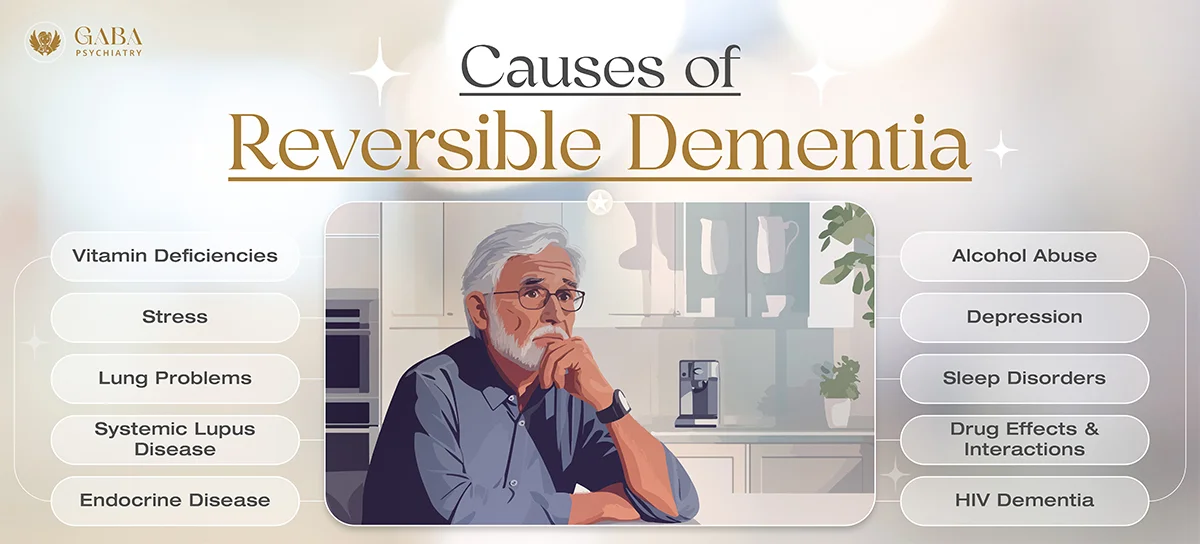
The main causes of reversible dementia are:
Vitamin deficiencies
Vitamin deficiencies can mimic the symptoms of dementia. The most common deficiencies that cause cognitive impairment are vitamin B12, D3, and folate.
Low vitamin D3 levels are associated with both dementia and strokes. Blood folate deficiencies are common with age. Studies found that low serum folate levels are associated with poor neural signaling and an increased risk of dementia.
Metabolic diseases or abnormalities
The brain’s structural and functional changes from many years before the onset of dementia symptoms. High blood pressure, high blood glucose levels, abdominal obesity, hypothyroidism, hypoparathyroidism, and dyslipidemia (having blood lipid levels that are too high or low) are risk factors that can cause dementia-like symptoms.
Drug effects and interactions
Many drug interactions in geriatric medicine can display symptoms of dementia. The most common medications with adverse drug interactions are antidepressants, antiplatelets, antipsychotics, antihistamines, and omeprazole. Benzodiazepines, antihypertensives, and drugs with anticholinergic properties can also induce dementia-like symptoms. They may result in several neuropsychological deficits.
Depression
Pseudodementia is a term used to describe intellectual decline stemming from the lack of energy or effort. A decline in cognition is swift in the case of depression; far more so than Alzheimer’s or other forms of the condition.
Excessive alcohol consumption
The alcohol metabolite acetaldehyde was shown to be a direct neurotoxic. Chronic alcohol-induced dementia symptoms can result in memory problems, executive dysfunction, and poor spatial awareness of an individual.
Stress
Chronic stress releases cortisol, the stress hormone, which can affect memory. Struggling with stress for long periods can result in compromised immunity.
Inflammation
Inflammation is an immune response to an injury, pathogens, oxidative stress, and toxins. Persistent chronic inflammation has been linked with increased chances of dementia by affecting the nervous system.
Lung Problems
Lung problems can result in a shortage of oxygen supply to the brain. Patients suffering from conditions such as COPD or chronic obstructive pulmonary disorder have a higher risk of experiencing dementia symptoms than the rest of the population.
Sleep Disorders
Sleep problems, such as undiagnosed sleep apnea, can damage the brain significantly. However, this damage is reversible with a correct diagnosis. Studies revealed that patients suffering from sleep apnea and brain damage showed significant improvement after using the CPAP machine for three months or more.
Systemic Lupus Disease
An autoimmune disorder, Systemic Lupus Erythematosus (SLE) can be affected by genetic and epigenetic factors (environmental aspects that affect a person’s behaviors without impacting the genes). It can also affect hormones and the immune system. The damage to the body can be unpredictable. Many organs, including the brain, may be affected, causing neuropsychiatric symptoms.
HIV dementia
HIV dementia is caused by the HIV virus crossing the blood-brain barrier. HIV dementia can present with anger, depression, irritability and impairment in memory and executive functioning, and visuospatial planning. HIV dementia is partially reversible and symptoms typically improve rapidly with adherence to antiretrovirals.

Irreversible Dementia
Irreversible dementia happens due to unusual brain activity because of an injured brain. Such conditions are irreversible, but with a correct diagnosis and medications, the progression of the conditions may be slowed.
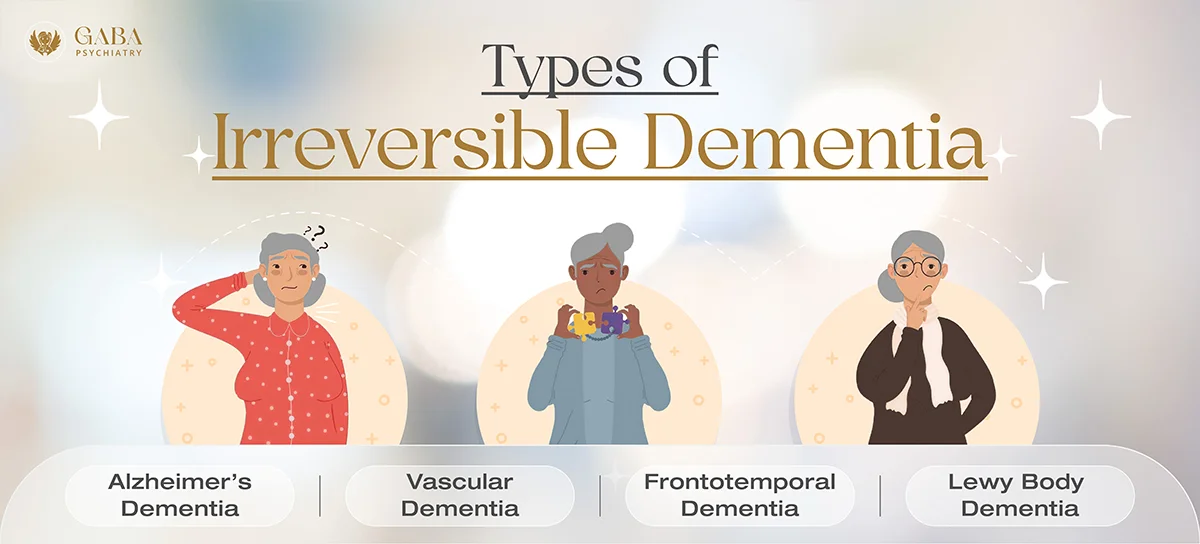
The following are the forms of irreversible dementia:
Alzheimer’s Dementia
Alzheimer’s disease is possibly the best-known example of the condition. It is one of the two most common forms of dementia. That is nearly one in nine Americans suffering from the disease above the age of 65 years. It is progressive, and a combination of medications can help slow down the severity of the symptoms and progression.
Ongoing research, including clinical trials conducted by national institutes, has shown improvements in treatments, slowing the degeneration of the nerves with medications. Alzheimer’s disease takes many years to progress. However, the cognitive decline of the disease, despite controlling the amyloid buildup, continues in many cases.
If you or a family member is suffering from memory problems, confusion, or compromised cognitive abilities, then it is advisable to reach out for support. Alzheimer’s disease requires specialized care.
One of our board-certified psychiatrists will consider your lifestyle (activity/stress levels), medical history, symptoms, and other psychodynamic factors to diagnose and treat your symptoms. With the right support and medication, you can control the severity of the symptoms.
Vascular Dementia
Vascular dementia is the second most common type of condition to affects millions worldwide. In the US, it accounts for up to 40% of dementia among elderly people. It occurs during a stroke or a few series of strokes.
Cardiovascular disease and cerebrovascular diseases are the main causes of vascular dementia. The restricted blood flow to the brain during a stroke causes irreversible brain damage, by starving brain cells of essential nutrients and oxygen. The brain’s cortex is affected, which controls memory, learning, and language.
Sometimes, the damage from the initial few strokes may be negligible; however, it may add up over time. It can lead to confusion, memory problems, trouble speaking or articulating, and other symptoms of dementia.
Support and therapy with the right medications can help ease the symptoms. Lifestyle changes, including regular physical activity and treating cardiovascular problems, can improve symptoms and lead to many active years.
With the right diagnosis, treatment, and medication, you can lead a fulfilling and rewarding life. Reach out for treatment and support.
Lewy Body Dementia
Lewy Body dementia (LBD) is a rarer form of dementia, affecting between 5% to 10% of cases globally. Protein deposits known as Lewy bodies (alpha-synuclein), accumulating in the brain in microscopic quantities, cause the condition. These deposits interfere with normal brain function, causing a noticeable decline in the person’s cognitive abilities.
Variations
Lewy Body dementia takes on two forms, both with different initial symptoms. For instance, LBD starts with memory loss, as in Alzheimer’s disease; it may, however, later develop into movement, sleep, behavior, and cognitive issues, such as hallucinations.
Parkinson’s disease dementia is the other form of Lewy Body dementia; it may seem like a movement disorder in its initial stages, only to be followed by the onset of dementia symptoms.
Both forms of Lewy Body dementia experience a similar spectrum of issues:
- Tremors
- Visual hallucinations
- Varying degrees of inattention and alertness
- Shuffling gait
- Sleep disorders
Although Lewy body dementia may seem like an Alzheimer’s disease or Parkinson’s disease diagnosis, the treatment options vary. The early symptoms of the condition determine the treatment options, making an early diagnosis crucial for managing the condition.
A psychiatrist can diagnose and help manage the symptoms of the condition; people can live happier and more independent lives with proper medications and additional training in symptom management and support strategy. There is no cure for Lew Body dementia, but a diagnosis can help with customized treatment plans.
No one should suffer alone. If you or your loved ones are suffering from memory loss, confusion, and other psychiatric symptoms, then it is advisable to get a thorough evaluation for an accurate diagnosis.
Frontotemporal Dementia
Frontotemporal disorders (FTD) occur when there is damage to the frontal and temporal lobes of the brain. Depending on which part of the brain is affected, symptoms vary between patients and encompass a wide range of unusual behaviors. Communication problems, poor emotional regulation, trouble with movements, and difficulty with work can all be symptoms of the disorder.
FTD affects people at a younger age; approximately slightly more than half (60%) of people with FTDs are 45 to 64 years of age. FTD is progressive, meaning symptoms deteriorate over time. It may start with a single symptom, which determines the treatment options.
The frontal lobe is responsible for:
- Social skills
- Movement
- Reasoning and judgment
- Verbal communication
- Understanding what is right or wrong
- Self-control/inhibitions
Temporal lobes handle:
- Memory
- Hearing
- Understanding verbal communication
- Emotional expression and processing
FTD usually affects any combination of these sections of the brain. As the condition develops, more segments of the brain are affected.
- Behavioral variant frontotemporal dementia
- Primary progressive aphasia
- Movement Disorders
- Corticobasal syndrome
- Progressive supranuclear palsy
Dementia Diagnosis
The thought of a dementia initial diagnosis can be frightening. However, screening and diagnosis for dementia are important parts of the diagnostic process in order to receive treatment and start planning for the future.
Many forms of dementia are treatable, and initiation of dementia treatment can result in rapid resolution of symptoms.
A dementia diagnosis may be necessary to obtain access to benefits such as transportation to appointments, home care, and assisted living, and to refer patients for appropriate long-term services. Certain medications will also not be covered by insurance without a diagnosis.
Steps involved in dementia diagnosis
- Initial screening, where symptoms and medical history are discussed, begins with a primary care physician
- Evaluate for medical causes of cognitive impairment
- Evaluate for reversible causes of cognitive impairment
- Dementia testing to measure the degree of cognitive impairment. Dementia testing has to be repeated over a period of months to make a definitive diagnosis of dementia
Mini-Mental State Exam (MMSE):
This is a brief test that evaluates various factors of the cognitive abilities of the elderly. The MMSE is very basic and easy to understand; it involves doing simple calculations and following instructions.
Mini-Cog:
This test involves a very common dementia assessment called the “clock drawing test,” which tests a person’s memory. It requires the person to draw a clock; they are asked to point out the correct times that are being called out.
Informant Questionnaire on Cognitive Decline in the Elderly (IQCODE):
This test is meant for family and friends of the person being evaluated, also known as the informant. It asks them to consider their behavior from a decade ago and compare it to what it is now. It is meant to highlight the differences and problem areas.
General Practitioner Assessment of Cognition (GPCOG):
A medical professional reviews the informants’ evaluations and also considers the “clock drawing test” to conclude the patient’s cognitive abilities and others’ perception of them.
It is important to remember that mild cognitive decline is very common in individuals over sixty-five, and mild cognitive impairment does not qualify for a diagnosis of dementia, which is why accurate evaluation by healthcare professionals is essential.
A dementia diagnosis can only be made when underlying medical conditions are excluded, and cognitive decline is progressive and lasts for more than three months.
Who can make a dementia diagnosis?
Although any doctor can make a dementia diagnosis, it is common for elderly individuals to be wrongly diagnosed with dementia or not receive the correct treatment without evaluation by a physician specialist, which is why specialists are best suited to diagnose alzheimer’s disease accurately. Ideally, dementia should be diagnosed by a board-certified psychiatrist, neurologist, or another qualified mental health professional.
Anxiety is a highly treatable and manageable condition. Most people can manage their symptoms to a point where they no longer affect their daily life.
If you find yourself experiencing any of these symptoms, then you might just need to consider an anti-anxiety medication. Although some individuals worry that needing medication means they are weak or “broken”, the fact is, anxiety treatment is the same as treatment for any other medical condition. Mental health needs to be treated with as much priority as physical health.


Stages of Dementia
As per the World Health Organization, dementia can be categorized into three stages: early, middle, and late. Symptoms corresponding to the different stages are highlighted below.
Early Stage
In its early stages, a person suffering from dementia will still be able to function, almost normally. The symptoms will be barely noticeable:
- Mild forgetfulness
- Feeling lost in familiar spaces
- Experience unexplained time lapses
- Difficulty with complex tasks
The symptoms remain mostly unnoticeable; this period usually lasts for two years.
Middle Stage
As the dementia progresses, it becomes harder to hide the symptoms.
- Short-term memory loss leads to forgetting recent events and repeating actions or questions
- Trouble recognizing familiar environments like home
- Drastic behavior changes
- Changes in sleep patterns
- Increased paranoia, hallucinations, and sometimes delirium
- Will require assistance with personal hygiene and daily activities
This may be the longest period of dementia, lasting between two to four years.
Late Stage
At the last stage, dementia severely impairs the person’s memory and cognitive functions.
- Unaware of their environment and the people around them
- Cannot recognize their loved ones
- Problems with movement
- Behavior issues such as aggression
- Lose any concept of time
By this point, the person will require full-time care for everyday activities. This is possibly the shortest period of dementia, lasting between 1 to 2 years.
A dementia diagnosis can be overwhelming for the person, their family, and loved ones. If you know of someone who is suffering from cognitive decline and exhibits other symptoms of the condition, it is advisable to seek assistance. A diagnosis in its early stages can control the symptoms of the condition, making it easier to manage with medications.
Dementia Treatment
Before starting dementia treatment, it is important to determine the underlying cause.
Reversible Dementia Treatment
Step 1: Psychiatric evaluation
Step 2: A physical exam to screen for Parkinson’s dementia and reversible types of dementia
Step 3: MRI brain scans to screen for microvascular disease
Step 4: Bloodwork to check for nutritional deficiencies and endocrine causes
Step 5: Treat depression, insomnia, and any psychiatric illness that could exacerbate symptoms
Step 6: Treat sleep apnea, nutritional deficiencies, thyroid disease, and any other illness that could be exacerbating symptoms
Step 7: Evaluate for drug interactions
Step 8: Discontinue any medications that could be causing delirium.
Irreversible or Progressive Dementia Treatment
Determine the underlying cause of progressive dementia.
The most common causes of progressive or irreversible dementia include:
- Microvascular dementia is often mild, and progression can be delayed with treatment.
- Alzheimer’s dementia is comparatively slow progressing, and with appropriate supportive care, individuals can lead a reasonable quality of life for several years.
- Parkinson’s dementia is usually slow-progressing and symptoms can improve with supportive care
- Lewy body dementia or frontotemporal dementia is fast progressing and requires supportive treatment
Microvascular Dementia Treatment
Causes of microvascular dementia treatment include hypertension, diabetes, neurovascular disease, and hypercholesterolemia. Strict control of metabolic disease can dramatically slow the progression of dementia.
Certain medications, such as SSRIs, can improve symptoms of microvascular dementia. Cognitive remediation exercises have also been shown to have some benefits for the treatment of microvascular dementia.
Alzheimer’s Dementia Treatment
Alzheimer’s disease treatment is complex and includes a combination of medication, therapy, and supportive interventions.
Medications for Alzheimer’s disease, as well as improving cognitive functioning, have been known to slow the progression of the disease to some extent. Treating insomnia, anxiety, depression, agitation, and other symptoms associated with disease progression allows sufferers to live at home longer, engage with their family, and live an enhanced quality of life.
Parkinson’s Dementia Treatment
Individuals suffering from Lewy body dementia can develop agitation, insomnia, paranoia, and aggression. It is important to start medication as the disease progresses.
Individual and family therapy is a mainstay of treatment to offer support, prevent carer burnout, and assist in educating caregivers while gaining access to services.
Lewy Body Dementia Treatment
Individuals suffering from Lewy body dementia can develop agitation, insomnia, paranoia, and aggression. It is important to start medication as the disease progresses.
Individual and family therapy is a mainstay of treatment to offer support, prevent carer burnout, and assist in gaining access to services.
Therapy, environmental support, and medication, including approaches such as music therapy and art therapy, are the most commonly prescribed treatment options for a person suffering from dementia.
The goal is to keep the person suffering from dementia safe and with their symptoms with medication. Environmental support and therapy can ease feelings of anger, frustration, or anxiety. Family support is crucial at this stage; caregivers and care partners should also seek support through therapy with a counselor and peer groups.
Pseudodementia Treatment
Pseudodementia is a type of dementia in the elderly caused by an imbalance of the serotonin system, causing cognitive decline. Pseudodementia is often mistaken for Alzheimer’s disease. Unlike Alzheimer’s disease, symptoms of pseudodementia respond rapidly to medication
The most commonly used medications for pseudodementia treatment include SSRIs, although other types of medication can be effective.
Supplements have also been found to be useful for the treatment of pseudodementia.
HIV Dementia Treatment
HIV dementia treatment includes strict adherence to antiretrovirals. Reducing the viral load can cause dramatic improvement in symptoms. Short-term supportive treatment includes antidepressants, mood stabilizers, and antipsychotic medication.
Therapy is an important part of HIV dementia treatment, enabling individuals to deal with stigma and walk individuals through the treatment process. Studies show that individuals who receive HIV dementia treatment show a much better long-term prognosis, are more likely to be adherent to antiretroviral treatment, and benefit from specialized training among care teams involved in their treatment, and show a better quality of life.




Dementia Dizziness Treatment
Dizziness is a common symptom for people with dementia. Dementia can make individuals feel more confused, upset, and disrupt their day-to-day activities. Individuals who are dealing with cognitive changes can suddenly feel disbalanced or lightheaded, which can make walking, standing, or even simple movement dangerous. Since dementia affects certain parts of the brain that control balance, spatial awareness, and coordination, dizziness is not just another problem; it increases the risk of falling and increases anxiety about movement.
Changes in inner ear balance, drug side effects, hypotension or dehydration, or the brain’s capacity to interpret sensory data can all cause dizziness. It may also result from interactions between changes in cognition and the way the brain processes bodily information. A proper treatment plan can only begin after a thorough evaluation, which includes reviewing an individual’s history and understanding their current medications, daily routines, and any recent symptom changes.
Our board-certified psychiatrists work with the individual to identify the underlying patterns and create a plan to optimize treatment and reduce side effects. Individuals having issues with memory find it very troubling when they experience dizziness. At GABA, our psychiatrists provide tips on making home environments safer and coping strategies to lessen fear and improve functioning. The treatment of dizziness in dementia is personalized; it does not come as one general care plan. The treatment plan may include therapy and medication, such as treating separate symptoms related to dizziness. Psychotherapy, Cognitive Behavioral Therapy (CBT).
Psychiatrist for Dementia
Also to mention, some individuals, in the bid to avoid medication, opt to try out supplements. Supplements like magnesium glycinate, ashwagandha, vitamin B complex, L-theanine, N-acetylcysteine, or lavender oil.
These supplements can support mood, reduce stress, and be effective for mild to moderate anxiety. They can also be used as adjunct therapy but must be safely used under a provider’s guidance.
However, they are not meant to entirely replace prescription medications for anxiety, especially severe or chronic anxiety disorders.
Dementia Medications
Dementia medication helps control the symptoms of the condition, although the changes to the brain are irreversible.
There are a few approved medications. A combination of drugs is usually prescribed for the best-suited, tailored treatment plan. Each patient varies, and what may work for one patient may not work for the next.
Your psychiatrist will conduct several evaluations detailing your nutritional and hormone levels; and understand your medical history and symptoms. They will take an integrative approach to your treatment options, offering the best solutions for a balanced life.
Cholinesterase inhibitors (ChEIs)
This medication is used to treat mild to moderate symptoms of dementia. There are three of this class of medication. They are used to treat up to moderate symptoms of Alzheimer’s disease. One of them is prescribed for both Parkinson’s disease and AD.
Cholinesterase inhibitors allow neural connections to communicate and thrive. People suffering from dementia lose brain cells as they die after losing neural connections.
Another third medication used for treatment also affects the brain’s chemical messaging system, but it works on different areas of the brain.
N-methyl-D-aspartate (NMDA) receptor antagonist
One of the medications licensed for use affects moderate to severe dementia in AD. NMDA and ChEIs both affect different chemical reactions in the brain. Both are known to improve memory in a person suffering from dementia
Anti-amyloid antibody
This drug works on amyloid proteins that build plaques, causing Alzheimer’s disease. It slows down the progression of the symptoms, although it does not cure them.
Therapy, support, and medication can improve lives by managing symptoms. An early diagnosis can ease the symptoms and help a person lead an improved quality of life.
Reach out for the correct diagnosis and support. Don’t suffer alone.
Anxiety is a highly treatable and manageable condition. Most people can manage their symptoms to a point where they no longer affect their daily life.
If you find yourself experiencing any of these symptoms, then you might just need to consider an anti-anxiety medication. Although some individuals worry that needing medication means they are weak or “broken”, the fact is, anxiety treatment is the same as treatment for any other medical condition. Mental health needs to be treated with as much priority as physical health.
Therapy for Dementia
A dementia diagnosis can often lead to anxiety and depression in a person. Common forms of therapy for dementia are:
- Talk therapy with a counselor or group support
- Cognitive Stimulation therapy
- Cognitive Behavioral Therapy
Cognitive Behavior therapy (CBT) is one of the most common forms of talk therapy and is used to treat multiple psychiatric conditions, mostly anxiety and depression. It works by changing a person’s thoughts and behavior patterns to treat their symptoms.
Cognitive stimulation therapy (CST)
is a common therapy option for people suffering from mild to moderate dementia or Alzheimer’s disease. It focuses on themed activities that center around continued learning for improved cognitive abilities, emotionally and socially stimulated with group therapy.
Puzzles, games, and other activities with participants and facilitators help them stay focused and improve their memory. If CST is administered on a one-on-one basis, it is then known as iCST; however, CST is usually conducted in group settings as the social aspect of the therapy is crucial for improvement.
Although the benefits of CST in group settings cannot be denied, individual CST can also have a positive impact on a person’s cognitive abilities and emotions. Medication, along with therapy, is the ideal treatment option.
A psychiatrist will consider a combination of talk therapy, CST, and medications to slow the progress of a person’s cognitive decline. With an early diagnosis, you can ease many symptoms and lead a happy and fulfilling life.
A person can also seek support from many of the Alzheimer’s disease and other dementia support groups. Speaking with people going through similar challenges in their lives helps many come to terms with their diagnosis, or that of their loved ones.
If someone you know is suffering from memory problems, confusion, behavior or personality changes, then it is advisable for them to seek the necessary support.
Anxiety is a highly treatable and manageable condition. Most people can manage their symptoms to a point where they no longer affect their daily life.
If you find yourself experiencing any of these symptoms, then you might just need to consider an anti-anxiety medication. Although some individuals worry that needing medication means they are weak or “broken”, the fact is, anxiety treatment is the same as treatment for any other medical condition. Mental health needs to be treated with as much priority as physical health.
Dementia Caregiver Support
Caregiving involves many unforeseeable stressors. You may need to provide a caregiver for years. The burnout can leave you feeling resentful and overwhelmed, affecting the quality of care you provide for your loved one. It can also affect your personal relationships, health, academics, and professional performance.
Taking frequent breaks and getting caregiving assistance is important for the best care for your family. If your loved ones are suffering from impaired cognitive abilities and memory issues, then a thorough evaluation and an early diagnosis can slow the development of the condition.
Our board-certified psychiatrists are committed to providing optimal, patient-centric care. They treat patients based on the level of cognitive impairment, assess for other underlying disorders or conditions, and consider drug interactions.
With dementia, the most crucial aspect is an early diagnosis. It can significantly improve the patient’s symptoms and also give their families enough time to prepare. An early intervention also extends the period of independence for the patient.
Accepting the difficult diagnosis can be overwhelming. Working through the challenges of the initial symptoms together can help both the patient as well as the caregiver.
It is important not to suffer alone. Get a diagnostic evaluation and get the treatment you or your loved ones require to alleviate the symptoms, manage medication, and access support services.
Anxiety is a highly treatable and manageable condition. Most people can manage their symptoms to a point where they no longer affect their daily life.
If you find yourself experiencing any of these symptoms, then you might just need to consider an anti-anxiety medication. Although some individuals worry that needing medication means they are weak or “broken”, the fact is, anxiety treatment is the same as treatment for any other medical condition. Mental health needs to be treated with as much priority as physical health.
Caregiver’s Burnout
Caregiving involves many unforeseeable stressors. You may need to provide a caregiver for years. The burnout can leave you feeling resentful and overwhelmed, affecting the quality of care you provide for your loved one. It can also affect your personal relationships, health, academics, and professional performance.
Taking frequent breaks and getting caregiving assistance is important for the best care for your family. If your loved ones are suffering from impaired cognitive abilities and memory issues, then a thorough evaluation and an early diagnosis can slow the development of the condition.
Our board-certified psychiatrists are committed to providing optimal, patient-centric care. They treat patients based on the level of cognitive impairment, assess for other underlying disorders or conditions, and consider drug interactions.
With dementia, the most crucial aspect is an early diagnosis. It can significantly improve the patient’s symptoms and also give their families enough time to prepare. An early intervention also extends the period of independence for the patient.
Accepting the difficult diagnosis can be overwhelming. Working through the challenges of the initial symptoms together can help both the patient as well as the caregiver.
It is important not to suffer alone. Get a diagnostic evaluation and get the treatment you or your loved ones require to alleviate the symptoms, manage medication, and access support services.
Anxiety is a highly treatable and manageable condition. Most people can manage their symptoms to a point where they no longer affect their daily life.
If you find yourself experiencing any of these symptoms, then you might just need to consider an anti-anxiety medication. Although some individuals worry that needing medication means they are weak or “broken”, the fact is, anxiety treatment is the same as treatment for any other medical condition. Mental health needs to be treated with as much priority as physical health.
Our Trusted Clients
My case was incredibly complicated. Dr Reddy was able to compile information from a variety of different sources and, with her experience, training, and field expertise, piece together what was truly happening with my family and I. Her staff were dedicated to making sure I was prepared for her…Read More
appointments. The appointments were easy to schedule around my full-time schedule. The staff was knowledgeable and compassionate regarding my case. I found her compelling but still graceful in court. Her office maintained the highest level of professionalism I could have asked for. I could not thank them enough for their support!
Dr. Beena Saad was absolutely wonderful! She was professional, attentive, and made me feel comfortable throughout the entire visit. She took the time to listen to my concerns, explained everything clearly, and offered thoughtful recommendations. The appointment…Read More
was on time, the staff was friendly, and the whole experience was smooth from start to finish. I’d highly recommend her to anyone looking for a caring and knowledgeable provider!
As an emergency physician I would love to refer my patients to a service like this. What a great resource for so many people who would benefit from the ease of tele-psychiatry…Read More
Dr. Reddy is highly respected in her field and patients absolutely love her. I definitely recommend Dr. Reddy and this valuable resource to everyone!
FAQs
When should someone with dementia be referred to geriatric psychiatry?
Memory, behavior, mood, or daily functioning changes become apparent such that quality of life is reduced or there is resultant distress of the patient or family, in the opinion of the consultant and the patient/family themselves, referrals to geriatric psychiatry should be instituted. This could mean increasing confusion, agitation, anxiety, or depression, problems with sleep, changes in personality, and difficulty with medication and medical condition management. A geriatric psychiatrist brings specialized knowledge of the interaction between brain change and medical illness to permit thoughtful assessment, careful medication management, and supportive guidance to enhance comfort, dignity, and well-being throughout all stages of dementia.
Can a geriatric psychiatrist diagnose dementia?
Geriatric psychiatrists are qualified to diagnose dementia. After years of interaction of aging, neurological changes, medical conditions, and mental health. With the help of clinical assessments, cognitive tests, an appraisal of medical history information, and input from other healthcare professionals as required, geriatric psychiatrists can accurately identify dementia as distinct from other conditions that might affect memory or behavior. Such expertise also enables them to treat the emotional and behavioral symptoms that are very common with dementia and hence offer holistic and empathetic care.
How to talk to a parent with dementia?
Patience matters most when speaking with a parent who has dementia. Look at them head-on but not in a confrontational way, and choose a quiet spot. Keep your eyes at the same height, and use brief, straightforward words. Feelings need to be recognized, but never challenged by pushing back or pointing out mistakes. A nod, a touch, a kind word, can hint that you are there to connect. Trust grows quietly through these interactions.
Key Communication Techniques
- A quiet space helps – turn off the television, lower the volume on devices. A quieter environment makes it easier to pay attention.
- Start right, face them straight on – a small smile works fine. If it feels right, toss in your name gently.
- Breathe slowly- Talk like someone showing you something real, not racing through lines. Leave space between words. Let each one stand clear.
- Pause longer- Let them take ten to fifteen seconds or just enough time to absorb what’s said before answering. Rushing takes away space to think.
- Talk Gently – Just speak simply so they’re seen as equals, not kids wrapped in cotton.
Picture prompts help – A photo, something saved, might spark recall. Personal items do this too. Even notes by hand can nudge memory forward.
What stage of dementia is hypersexuality?
A sudden interest in sex often shows up during the middle stages of dementia (which means levels four and five on typical seven-step charts) due to loss of inhibitions, judgment, and brain atrophy, particularly affecting the frontal lobes.
Stage-Specific Occurrence:
At first, excessive sex drive may signal trouble in people with Frontotemporal Dementia. Changes in behavior usually show up earlier than major forgetfulness.
In the middle stages (moderate dementia), things get more intense. With conditions like dementia, unusual sexual urges can rise sharply here. That shift ties back to fading front lobe function. These areas handle checking instincts and reading social cues. When they weaken, such restraint loosens too.
Late Stages (Severe Dementia): Though becoming physically weaker reduces such cases, inappropriate sexual behaviors still happen in serious dementia – sometimes due to sensory urges, sometimes because of mixed-up thinking.
Why does it happen?
When someone has dementia, a sudden interest in sex comes from the body’s biology – not desire or morals. This often happens because when the frontal lobe wears away, its ability to slow actions fades too. Cognitive decline also shows fading awareness of social signals, making it easier to confuse spaces or fail to recognize people.
Can you leave a Dementia patient alone?
No. The Law states that it can be illegal to leave a person with dementia alone in serious cases. The legal concern varies depending on the individual’s level of impairment and whether leaving them alone represents a serious risk. If the person with dementia cannot recognize danger, cannot manage medications, cannot prepare food safely, or cannot easily call for help, leaving them unattended for long periods might, in certain states, be considered neglect.
The important issue is safety. As dementia advances, risks of falling, having accidents with the stove, becoming dehydrated, and making mistakes with medication become prevalent. Families are asked to make decisions based on the individual’s cognitive level and the performance of activities of daily living.
GABA Telepsychiatry does a comprehensive assessment of cognitive status and helps families in understanding the level and type of treatment required. If there are issues regarding safety or other legal responsibilities, it is best to consult both a psychiatrist and a lawyer for appropriate guidance. Never separate dignity from safety.
Why Do Dementia Patients Stop Eating?
When a person with dementia starts to eat less food or refuses meals, it is not always because of stubbornness. In most cases, it is an indication of changes that might be occurring in their brains. Dementia interferes with many areas, including memory, appetite, coordination, and even understanding hunger signals. So the person might simply forget to eat, forget what purpose food serves, or become confused by the utensils set before them.
Swallowing difficulties are common, too. As the brain loses strength in controlling the muscles used in chewing and swallowing, eating becomes tiresome or even painful for many people. Some individuals do not stop to taste or smell what they eat; therefore, their interest in food drops. Others become nervous and cannot focus in a noisy place to eat.
The effect of certain medications or medical conditions on weight loss or lack of hunger should also be considered. Depression, for example, may often overlap with dementia and thereby restrict appetite.
Here at GABA Telepsychiatry, we undertake a thorough clinical evaluation. Our board-certified psychiatrists focus on determining whether the issue is neurological, emotional, or medical and then direct families towards treatment that might include medication management, simpler meals, calm eating environments, and coordination with care from neurologists and primary physicians. Loss of appetite is not only a behavioral change in dementia; it also indicates changes in brain functions.
What is childhood dementia?
Childhood dementia is one of the rarest forms of dementia and one of the most severe. It is a condition in which a child loses their ability to perform day-to-day activities. Unlike adult dementia, which may develop in the senior years, childhood dementia differs in that a child may begin to lose the ability to speak, move, or learn and retain information.
The most devastating part is that the child had the skills and ability to do it before, but due to reasons outside of the child’s control, they lost those abilities. The conditions are not the same as developmental delay or a developmental milestone, though they may start at that point. A child with dementia may appear to be a normal and healthy child, but they may be undeveloped in terms of the neurological system. If untreated, then dementia can develop to the point of ‘death of the brain’, which causes loss of the child’s ability to operate any of the basic functions.
At GABA Telepsychiatry, we understand that this is a difficult diagnosis for any family. Our primary goal is to address these other aspects while also promoting a higher quality of life. The family will also be included to go through emotional counseling. Providing compassionate support will help throughout childhood dementia, even though it is extremely difficult.
Can Someone Have Dementia and Still Sign Legal Documents?
In some cases, a person with dementia can sign legal documents, but only if they still have legal capacity. This is not determined by the diagnosis itself, but by whether the individual understands what they are signing, what the consequences of signing the paperwork will be, and how it impacts their rights or property.
Dementia is a progressive condition. In the early stage, many people are still able to make informed decisions. As it progresses, memory loss, confusion, and poor judgment may take over, slowly impairing true comprehension. Legal and medical professionals play a key role in this. Our board-certified psychiatrists at GABA conduct structured cognitive and psychiatric evaluations to see into decision making ability when required. We provide a medical report on cognitive and mental health, which in turn is used as a piece of the puzzle. If there is a question, we recommend a consultation with a mental health professional and an attorney specializing in elder law. By taking these steps, we help to protect the autonomy of the sufferer and, at the same time, prevent exploitation.
Can Xanax cause dementia?
Xanax (alprazolam) falls into the category of drugs known as benzodiazepines, which are often used to treat anxiety and panic disorders. This medication has been a subject of some research, examining whether long-term or frequent use of benzodiazepines can cause an increased risk of cognitive decline or dementia, especially in the elderly. However, this is a complex issue as the current research is inconclusive. Research shows that very long-term use, high doses, or use in people who already have memory issues may lead to cognitive problems. Because of this, xanax is usually prescribed for short-term use, and the effects on the patient should be closely monitored. If our board-certified psychiatrists see signs of memory issues or confusion, we recommend a mental health evaluation to help us determine whether it is the medication, the aging process, or another issue affecting cognitive health.
How does an Online Psychiatrist visit work?


All you need is a computer or mobile device and internet